
Film
PlayTime
Monsieur Hulot and a group of American tourists drift through a hyper-modern, glass-and-steel Paris of automatic doors, anonymous office cubicles and a too-sleek nightclub that descends, course by course, into beautiful chaos. There is almost no dialogue, the film runs on near-infinite background gags, choreographed crowds and the soft clatter of modern life. To shoot it, Tati had an entire city of steel-and-glass towers built from scratch on the outskirts of Paris, nicknamed "Tativille." The production nearly bankrupted him, but PlayTime is now widely regarded as one of the greatest films ever made.
About
Jacques Tati spent nine years and his entire fortune making PlayTime. Construction on the purpose-built Tativille set began outside Paris in 1964: an entire glass-and-steel cityscape of office blocks, airport corridors and apartment buildings, complete with a working road system, built to give Tati exactly the depth and reflection he wanted. The film was shot in 70mm (one of the few European films of its era to use the format) and released in December 1967.
It was a commercial catastrophe. Tati was forced to declare bankruptcy and the rights to his earlier films were seized to pay creditors; he never recovered financially. Critics, however, recognised the film's stature almost immediately, and that recognition has only grown. Sight & Sound's critics' poll has placed PlayTime in the top hundred for half a century; Roger Ebert included it in his Great Movies series; Cahiers du Cinéma critics return to it as a permanent reference point.
The film is structured as a series of long, deep-focus tableaux in which dozens of small visual jokes unfold simultaneously, often at the edges of the frame. There is no protagonist in the conventional sense, Hulot drifts through the action, but so do many other figures the camera follows for a few minutes and then loses. It is a film designed to be watched repeatedly, in cinemas large enough to hold the 70mm image; recent restorations have made that possible again, and revival programmers consistently rank it as one of the most-requested titles in their catalogues.
Where to Watch
Not currently available in your country.
Available in: , , , , , , , , , , , , , , ,



























Streaming availability via JustWatch. Last checked 2026-09-27.
Top Cast
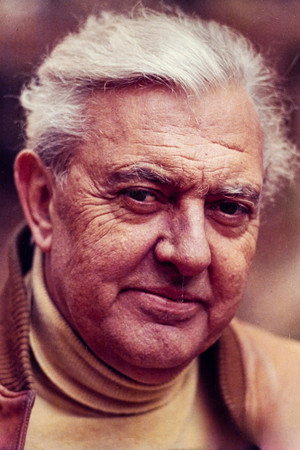
Jacques Tati
Monsieur Hulot

Barbara Dennek
Young Tourist

Rita Maiden
Mr. Schultz's Companion

France Rumilly
Woman Selling Eyeglasses

France Delahalle
Shopper in Department Store
Awards, Festivals & Mentions
-

Sight & Sound Critics' Top 100 Films of All Time
-
Cited as one of the great movies by Roger Ebert
-
Cahiers du Cinéma critics' poll favourite


