
Film
Stalingrad
A unit of German Wehrmacht soldiers, freshly arrived from the relative comfort of Italy in the autumn of 1942, is marched into the meatgrinder of the Stalingrad campaign and slowly destroyed by it. Joseph Vilsmaier's unflinching anti-war film treats the catastrophic German defeat without flag-waving or heroics, only attrition, frostbite, mutiny, and despair. Shot with a documentary-grade harshness and a near-total absence of musical sentimentality, it reduces the Sixth Army's collapse to the bodies of a handful of men. One of the great post-1990 European war films, and a landmark in German cinema's confrontation with its own history.
About
Joseph Vilsmaier's Stalingrad arrived in 1993 as one of the most expensive German productions of its decade, with a budget of approximately twenty million Deutschmarks. Vilsmaier (a former cinematographer who had directed Autumn Milk (1989) and Rama Dama (1991)) assembled a production at the upper limit of what unified Germany's young commercial film industry could finance, with shooting on location in Finland and Czech Republic across an unusually long winter schedule.
The film won the Bavarian Film Award for Best Direction in 1993 and earned multiple German Film Award nominations. Critically it has been widely treated as one of the most rigorous European reckonings with the Sixth Army's destruction at Stalingrad, alongside Michael Loeken and Ulrike Franke's documentary work, and Frank Beyer's earlier East German Five Cartridges. The film was deliberately positioned in opposition to the Hollywood war-film tradition; Vilsmaier has cited Sam Peckinpah's Cross of Iron (1977) (itself partly a German co-production) as a primary stylistic influence.
The cast is led by Thomas Kretschmann, Jochen Nickel, Sebastian Rudolph and Dominique Horwitz, with cinematography by Vilsmaier himself (he frequently shot his own films). The film is a permanent fixture in German history-curriculum and military-history viewing lists; the Bundeszentrale für politische Bildung (Federal Agency for Civic Education) lists it as a recommended teaching reference for the Eastern Front module of upper-secondary German history.
Where to Watch
Not currently available in your country.
Available in: , , , , , , , , , ,





















Streaming availability via JustWatch. Last checked 2026-09-27.
Top Cast

Dominique Horwitz
Corporal Fritz Reiser
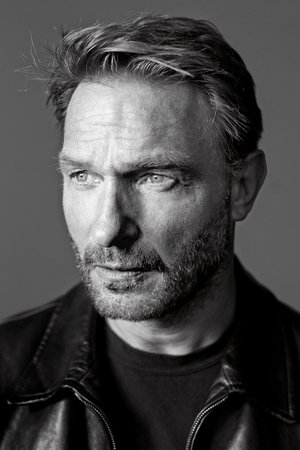
Thomas Kretschmann
Lieutenant Hans von Witzland
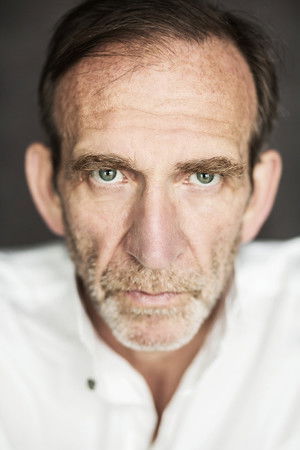
Jochen Nickel
Sergeant Manfred 'Rollo' Rohleder
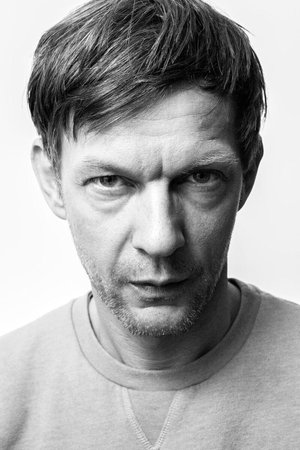
Sebastian Rudolph
GeGe Müller

Dana Vávrová
Irina
Awards, Festivals & Mentions
-

Winner × 2 — Lolas: Bavarian Film Award Best Direction (Vilsmaier), German Film Award nominations


In these collections
Featured In
- 10 Must-Watch European War Films 9 June 2026