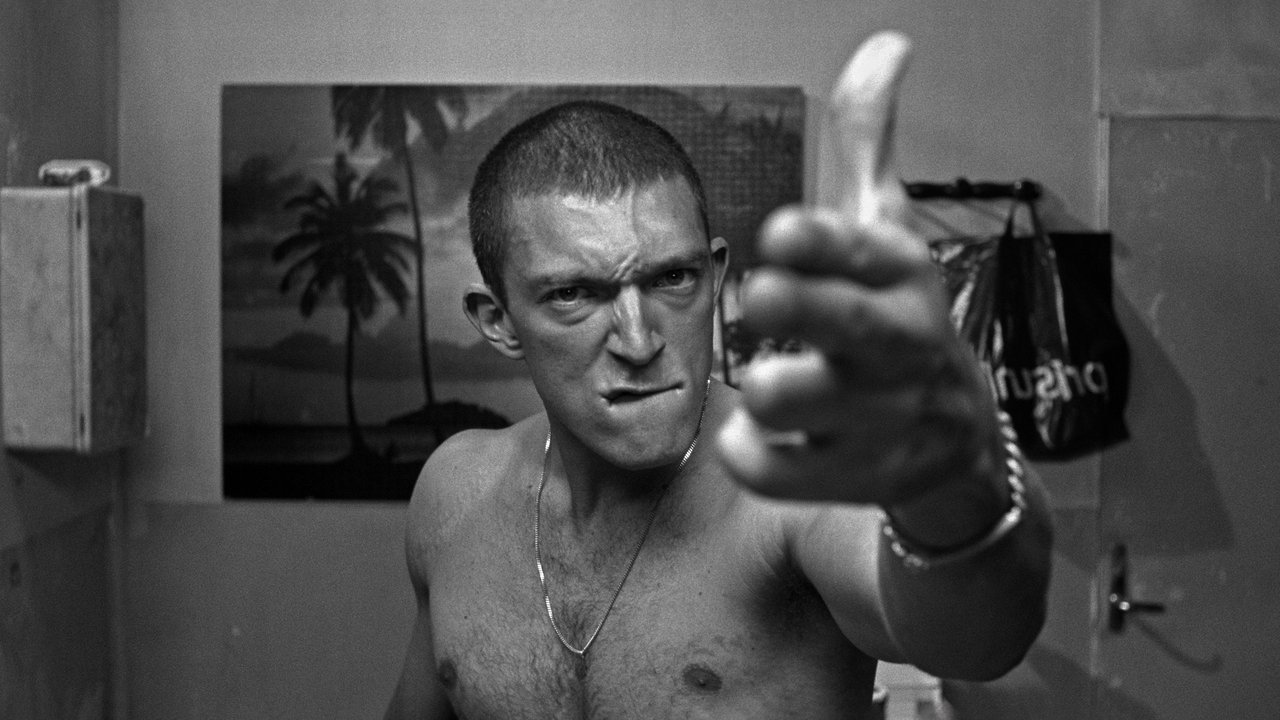
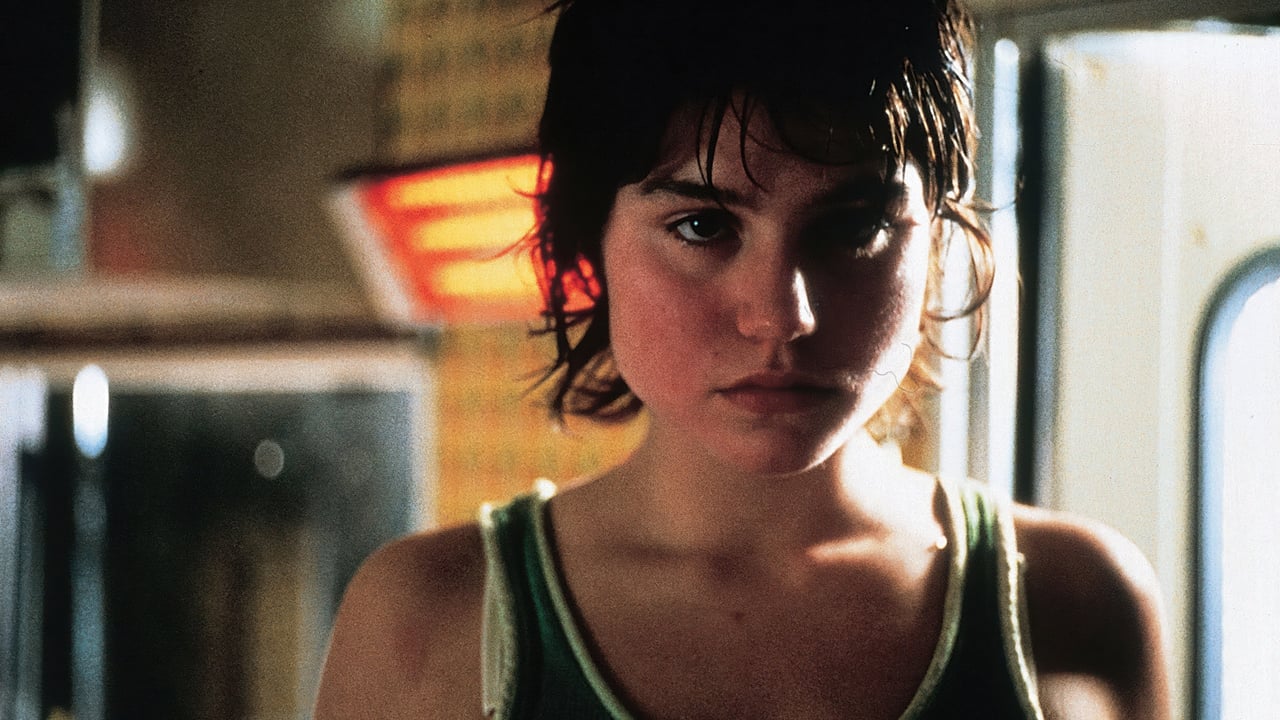
From Belgian stop-motion absurdism to Finnish deadpan, McDonagh's pitch-black register to Östlund's icy social satire, European comedy refuses to behave.
European comedy is harder to define than European drama, and that is part of the point. Hollywood produces a recognisable house style, a four-quadrant film engineered to land its laughs in roughly the same beats across English-speaking markets. Europe, by contrast, produces dozens of comedic traditions in dozens of languages, and the best of them are stubbornly local: a Belgian stop-motion film about plastic toys, a Finnish road movie about a metal band that has never played a gig, a French fable about a quadriplegic aristocrat and his caregiver. They travel because they are specific, not in spite of it.
The register varies wildly. Roberto Benigni built a Tuscan fable so tender it became one of the most-debated films of its decade. Ruben Östlund extracts comedy from human discomfort with surgical cruelty. Martin McDonagh writes profane Irish-inflected dialogue that flips into theological investigation without warning. Jean-Pierre Jeunet paints a Paris that exists nowhere outside cinema and dares you to mind. Maren Ade builds a 162-minute father-daughter portrait that contains one of the strangest party sequences in modern European film. The throughline is not tone but ambition: each of these films is recognisably the work of a director who refused to treat comedy as a lesser form.
Below are ten films, ordered loosely from the canonical to the cult, that together sketch the range. Several won Palmes and Oscars; several won almost nothing and continue to find their audience film by film. All of them are funny in ways that survive translation, and several are doing far more than being funny.
1. In Bruges
Dir. Martin McDonagh · UK / US · Crime comedy · BAFTA Best Original Screenplay
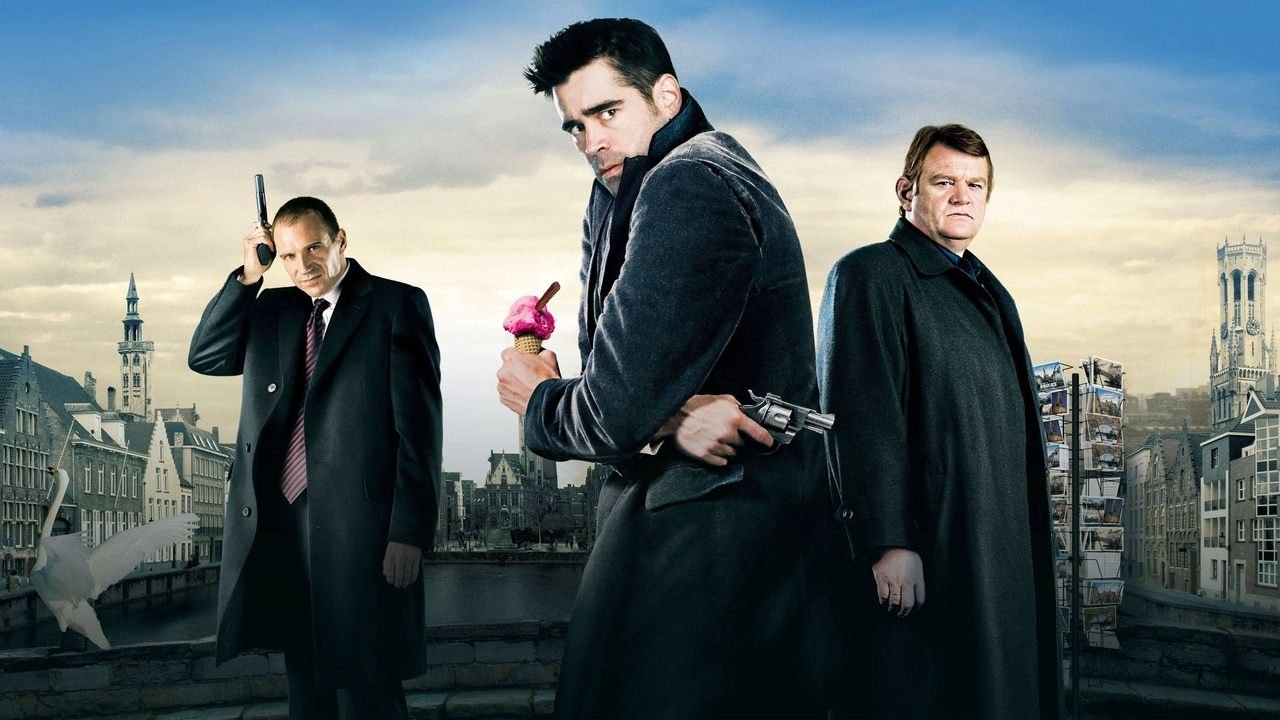
Martin McDonagh's 2008 debut feature, made after a celebrated theatre career as the playwright of The Pillowman and the Aran Islands trilogy, sends two hitmen to the medieval Belgian city of Bruges to lie low after a job has gone catastrophically wrong. Colin Farrell, in the career-redefining performance that pulled him out of the Hollywood studio system, plays the panicked Ray; Brendan Gleeson plays the gravely watchful Ken; Ralph Fiennes plays their London boss Harry. The film follows their few days in the city as they wait for further instructions.
In Bruges won the BAFTA for Best Original Screenplay and earned an Academy Award nomination in the same category. McDonagh operates simultaneously as broad-comic gangster picture, theological investigation of guilt and responsibility, and quiet meditation on Bruges as a tourist experience and an actual place. Eigil Bryld's photography of the city's architecture and Carter Burwell's score anchor a continuing emotional register beneath the profanity. McDonagh would extend the same broad-then-suddenly-narrow register through Seven Psychopaths, Three Billboards and The Banshees of Inisherin, but the partnership with Farrell and Gleeson began here.
2. Amélie
Dir. Jean-Pierre Jeunet · France / Germany · Romantic comedy · 5 Césars, 5 Oscar nominations
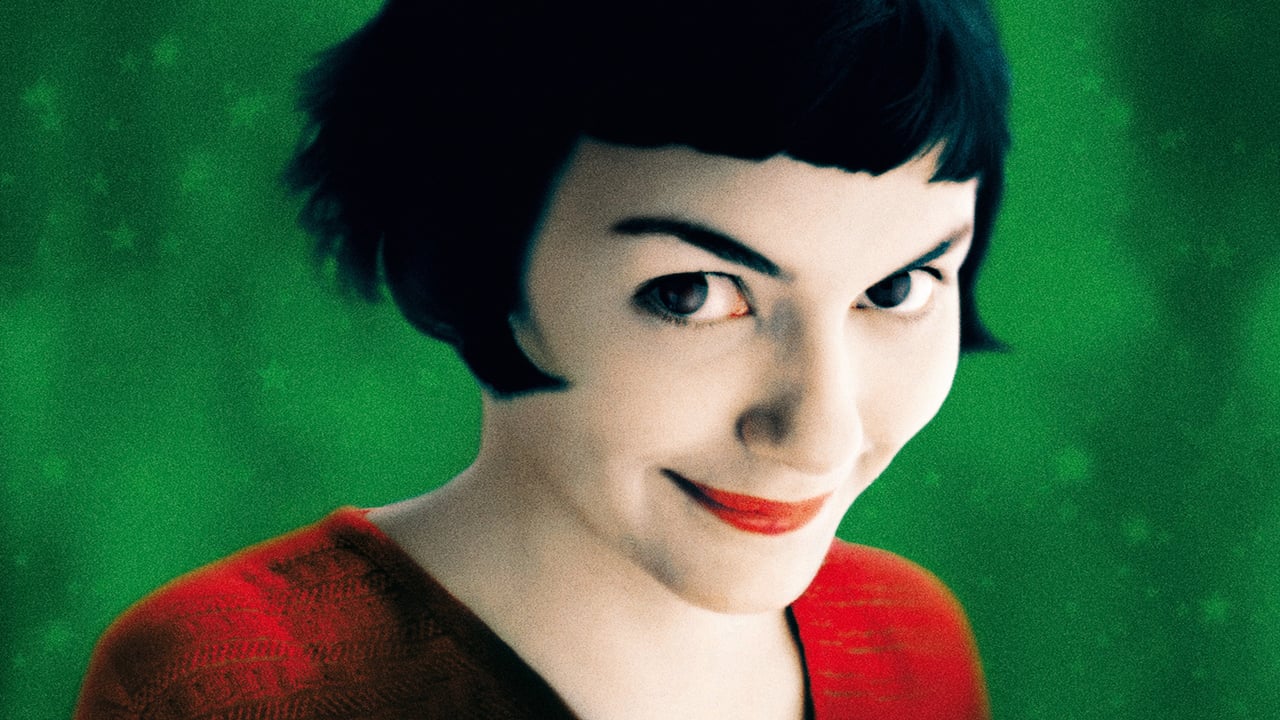
Jean-Pierre Jeunet's Amélie (Le Fabuleux Destin d'Amélie Poulain) opened in 2001 and became one of the most internationally successful French films of the decade: a $174 million worldwide gross, five Césars including Best Film and Best Director, and four Academy Award nominations including Best Foreign Language Film. The film made Audrey Tautou a global star and established the Jeunet visual-and-tonal register (saturated colours, whimsical magical realism, intricate chains of small consequence) that would define his subsequent work.
Tautou plays a shy waitress at the Café des 2 Moulins in Montmartre who finds an old tin box of childhood treasures behind the wall of her apartment and decides to spend her life secretly improving those of the lonely Parisians around her. Mathieu Kassovitz plays Nino, the man who collects discarded passport-photo strips from the Gare du Nord. Bruno Delbonnel's photography and Yann Tiersen's accordion-driven score produced a Paris that was widely criticised at the time as artificially clean and equally widely loved as the most charming sustained vision of the city in modern cinema. The score alone has remained ubiquitous in European hospitality and tourism for over twenty years.
3. Toni Erdmann
Dir. Maren Ade · Germany / Austria · Comedy-drama · European Film Award Best Film
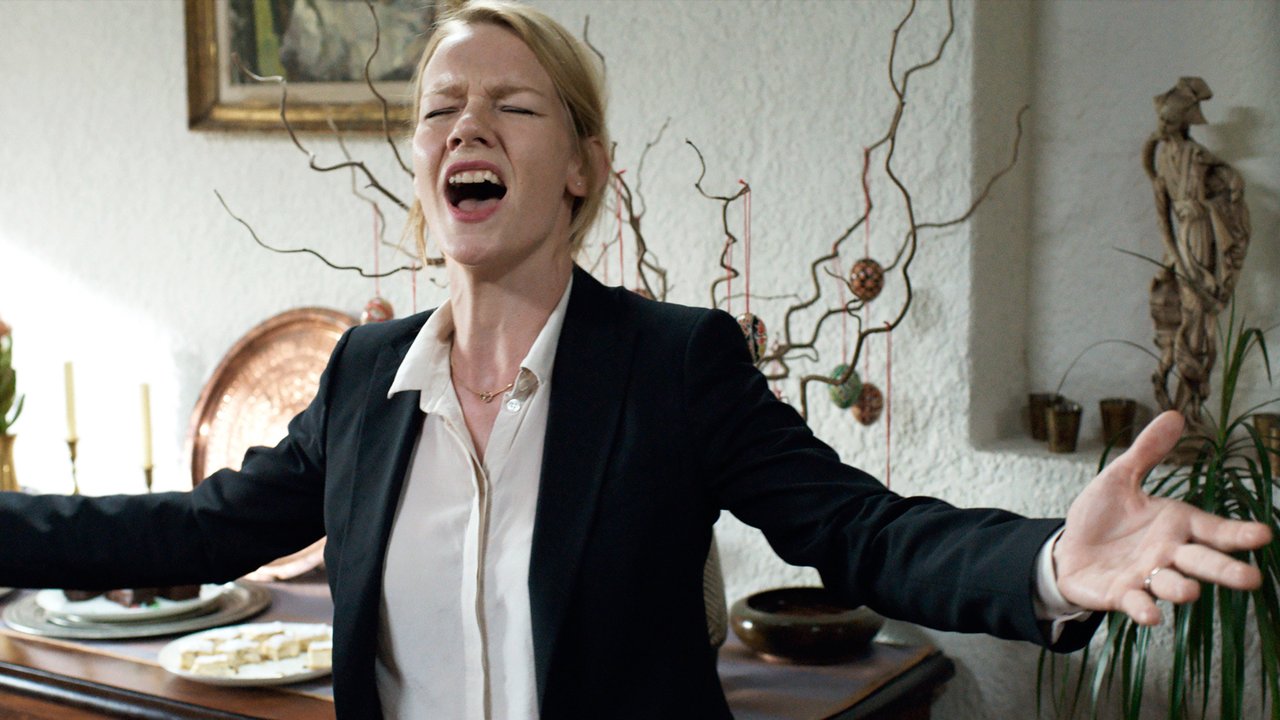
Maren Ade's Toni Erdmann won the FIPRESCI Prize at Cannes 2016 in a year when most observers assumed the film would also take the Palme; it didn't, but it won the European Film Award for Best Film and was nominated for the Academy Award for Best Foreign Language Film. The film established Ade as the most internationally significant German director of her generation and Sandra Hüller, who would later star in Anatomy of a Fall and The Zone of Interest, as a major European actress.
Hüller plays Ines, a German management consultant working in Bucharest on an oil-company restructuring brief that will result in mass redundancies. Her father Winfried (Peter Simonischek), a recently retired piano teacher with a fondness for elaborate practical jokes, turns up unannounced and starts impersonating a life coach called Toni Erdmann, complete with false teeth and a wig, in increasingly inappropriate professional contexts. The film's central question is what each of them owes the other, and what kind of work is doing what to each of them. Few 162-minute films have wasted fewer frames; few comedies have committed so completely to the awkwardness their premise demands.
4. Triangle of Sadness
Dir. Ruben Östlund · Sweden / France / UK / Germany · Satire · Palme d'Or
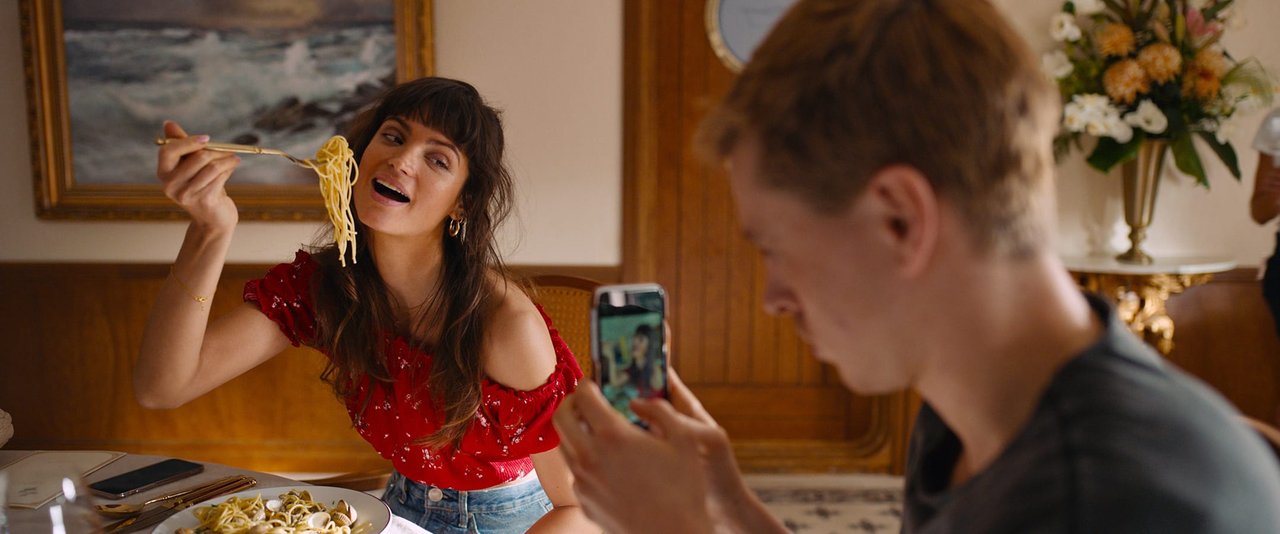
Ruben Östlund's Triangle of Sadness won the Palme d'Or at the 75th Cannes Film Festival in May 2022, his second Palme after The Square in 2017, joining a group of only nine directors in the festival's history to win the prize twice. The film also earned three Academy Award nominations at the 2023 ceremony, Best Picture, Best Director and Best Original Screenplay.
A celebrity model couple (Harris Dickinson and Charlbi Dean) joins an exclusive yacht cruise populated by obscenely wealthy passengers and their subservient crew, overseen by a drunken Marxist captain (Woody Harrelson). The supporting ensemble includes Dolly de Leon, Zlatko Burić and Vicki Berlin. Dean, a South African actress in her breakthrough English-language role, died of bacterial sepsis two months after the Cannes win and shortly before the film's U.S. theatrical release; the film is dedicated to her memory. Shot principally off the Aegean island of Evia and at Bavaria Filmstudios in Munich, the film grossed over $34 million worldwide on a budget of roughly $16 million, one of the highest-grossing Palme winners of the 2020s, and an Östlund satire as sharp and as cold as anything he has made.
5. The Banshees of Inisherin
Dir. Martin McDonagh · Ireland / UK · Drama-comedy · 9 Oscar nominations
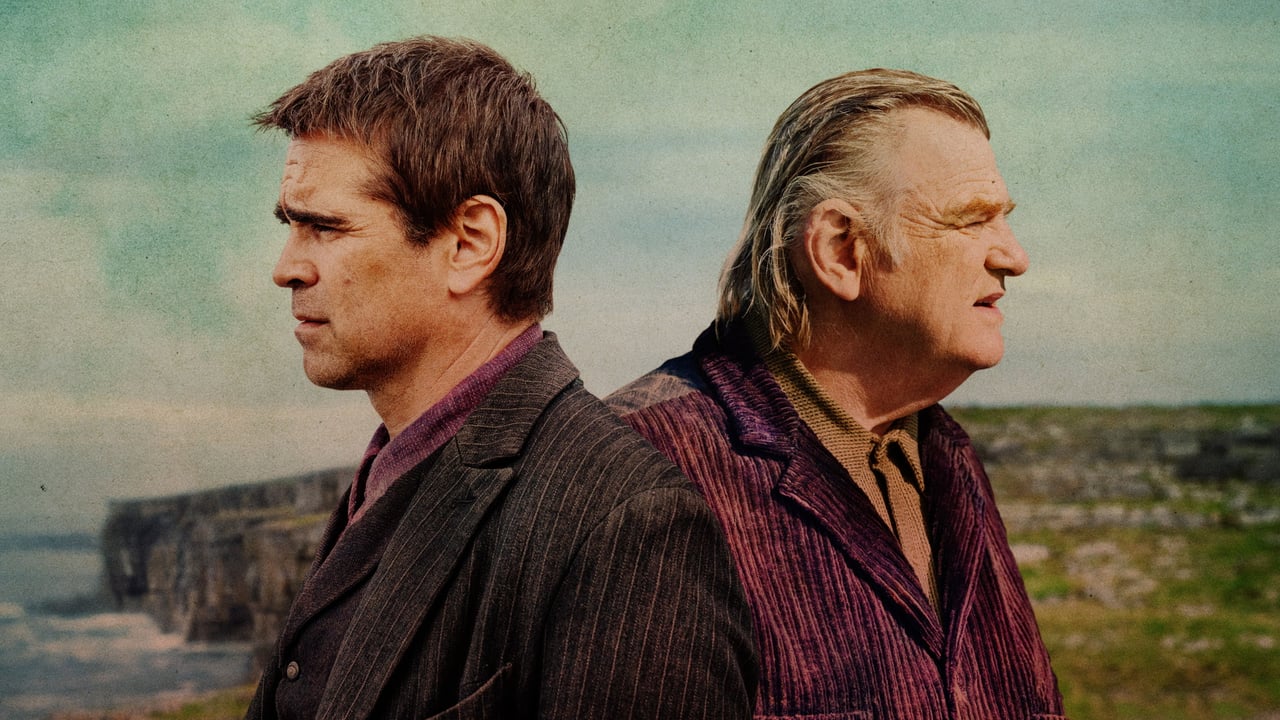
Martin McDonagh's 2022 film reunited the director with Colin Farrell and Brendan Gleeson, the leads of In Bruges fourteen years earlier. On a remote Irish island in 1923, Pádraic (Farrell) is stunned when his lifelong friend Colm (Gleeson) abruptly ends their friendship, refusing to give any reason beyond no longer wishing to spend time with him. Things spiral. Kerry Condon plays Pádraic's sister Siobhán; Barry Keoghan plays the island's outcast Dominic.
The film won Best Screenplay and the Volpi Cup for Best Actor (Farrell) at Venice 2022, then dominated the BAFTAs the following year, winning Best British Film, Best Original Screenplay, Best Supporting Actor (Keoghan) and Best Supporting Actress (Condon). At the Golden Globes it won Best Motion Picture - Musical or Comedy, Best Screenplay and Best Actor in a Musical or Comedy. Nine Academy Award nominations followed, including Best Picture and Best Director. Shot principally on Inishmore and Achill Island across the autumn of 2021, with Ben Davis's photography and Carter Burwell's score, this is McDonagh in his bleakest comic register, and probably his most fully realised film.
6. The Intouchables
Dir. Olivier Nakache & Éric Toledano · France · Comedy-drama · César Best Actor
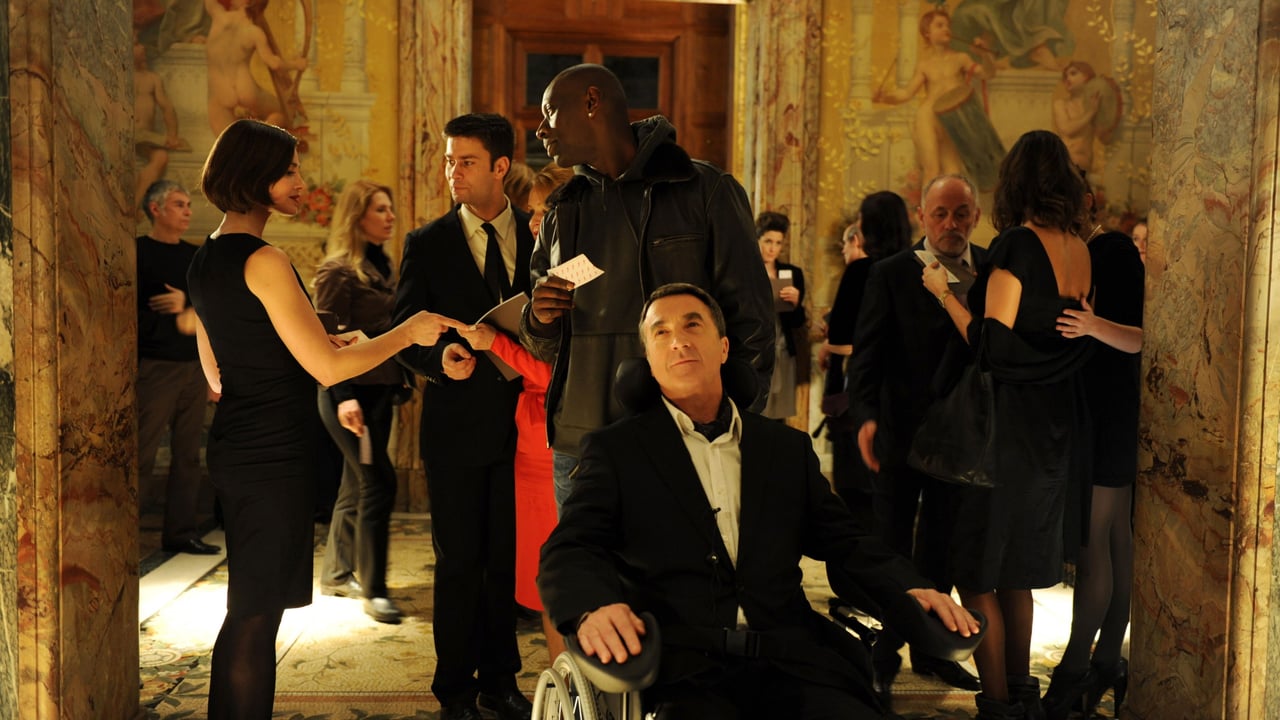
Olivier Nakache and Éric Toledano's The Intouchables opened in France in November 2011 and became the second-highest-grossing French-language film ever made at the time, with over €425 million worldwide and over nineteen million admissions in France alone. Omar Sy won the César for Best Actor at the 2012 ceremony, the first Black actor to win in the category, beating Jean Dujardin in the same year Dujardin would win the Academy Award for The Artist.
The film is loosely based on the real story of Philippe Pozzo di Borgo, a wealthy quadriplegic Parisian aristocrat, and Abdel Sellou, the young man from the projects he hired as his live-in caregiver, both of whom had documented their relationship in di Borgo's 2001 memoir. Sy is paired with François Cluzet, one of France's most consistent post-2000s leading men. Mathieu Vadepied shot it; Ludovico Einaudi scored it. The film led directly to an American remake (The Upside, 2017) and Indian, Korean and Spanish versions in subsequent years, but the warmth and comic timing of the Sy-Cluzet pairing has remained the version everyone returns to.
7. Life Is Beautiful
Dir. Roberto Benigni · Italy · Tragicomedy · 3 Academy Awards
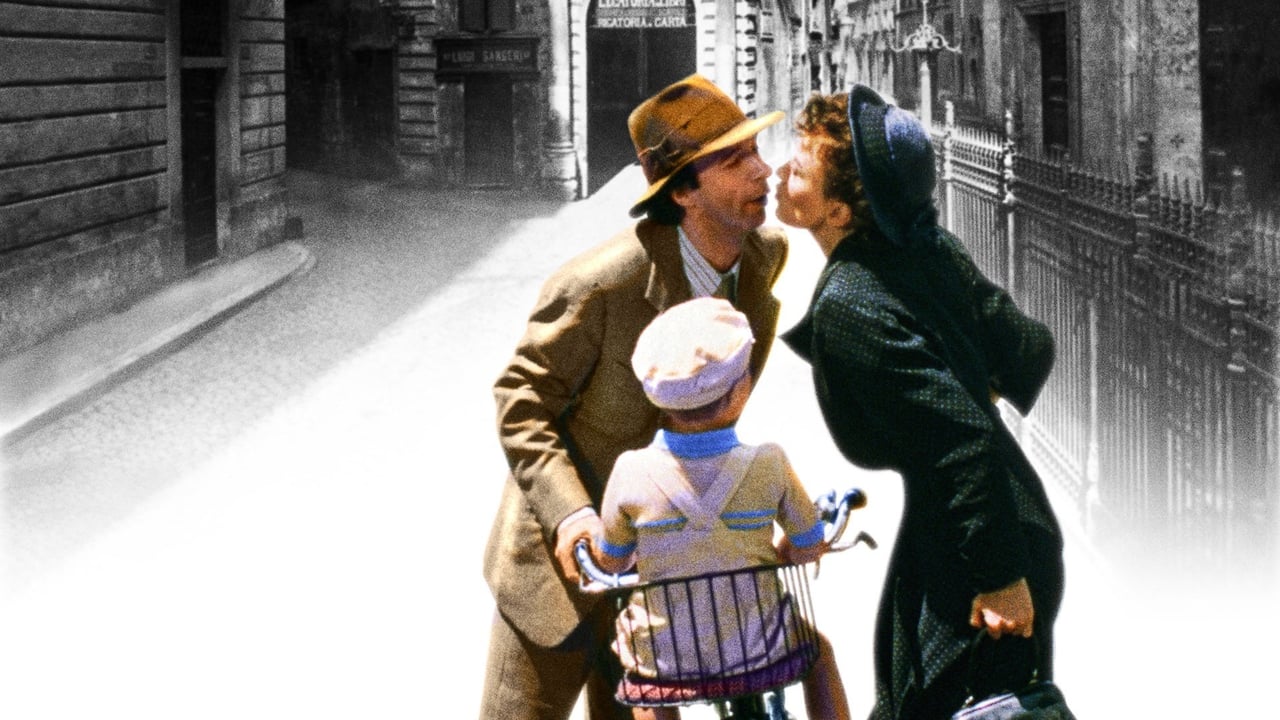
Roberto Benigni's Life Is Beautiful (La vita è bella) won the Grand Prix at Cannes 1998 and three Academy Awards at the 71st ceremony in 1999: Best Foreign Language Film, Best Original Dramatic Score for Nicola Piovani, and Best Actor for Benigni. Benigni's lead-acting Oscar made him the first man ever to win in the category for a non-English-speaking performance. The film became one of the most internationally consequential pieces of post-war Italian-Jewish cinema and one of the most-debated Holocaust films of any decade.
Guido Orefice (Benigni), a charming and irrepressibly optimistic Jewish-Italian man working as a waiter in a small Tuscan town in the late 1930s, falls in love with the schoolteacher Dora, played by Nicoletta Braschi, Benigni's real-life wife. The first half of the film follows their courtship, marriage and the early years of their family life with their young son Giosuè (Giorgio Cantarini). The film's central structural commitment, combining broad commedia-italiana physical comedy with one of the most morally serious historical subjects in twentieth-century European history, produced one of the most-debated works in contemporary cinema. Critical reception has been sharply divided in different periods; its continuing reach in international family-viewing audiences has been substantial.
8. Sing Street
Dir. John Carney · Ireland / UK · Musical comedy · Golden Globe nominee
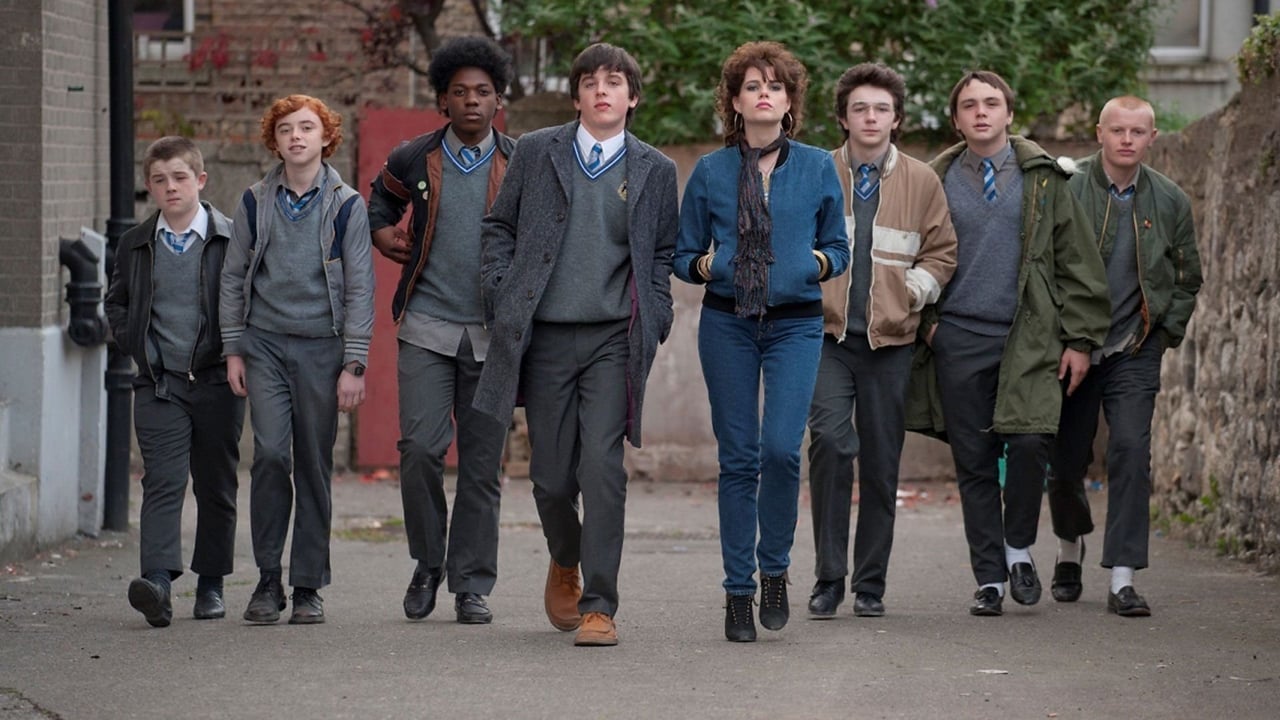
John Carney's Sing Street closed his unofficial Dublin music trilogy after Once (2007) and Begin Again (2013). The film premiered at Sundance in January 2016 and went on to nominations for the Golden Globe for Best Motion Picture - Musical or Comedy and the BAFTA for Outstanding British Film. In 1980s Dublin, a teenager escapes his troubled home life and a new tough school by forming a band to impress a mysterious girl, and the band starts writing increasingly accomplished pastiches of every new-wave and synth-pop record they can get their hands on.
The cast is led by newcomer Ferdia Walsh-Peelo, then sixteen, and Lucy Boynton, alongside Jack Reynor as Conor's older brother, and Aidan Gillen and Maria Doyle Kennedy as the parents. The original songs were co-written by Carney with Gary Clark of Danny Wilson; Drive It Like You Stole It in particular was singled out as among the strongest original soundtrack songs of the year. The film was shot in Synge Street CBS, the actual Christian Brothers' school where Carney himself had been a pupil in the 1980s. A stage adaptation has since opened in New York and London. As a comedy it is gentle; as a film about being a teenager and making things, it is unreasonably moving.
9. A Town Called Panic
Dir. Stéphane Aubier & Vincent Patar · Belgium / France / Luxembourg · Stop-motion · Cannes Out of Competition
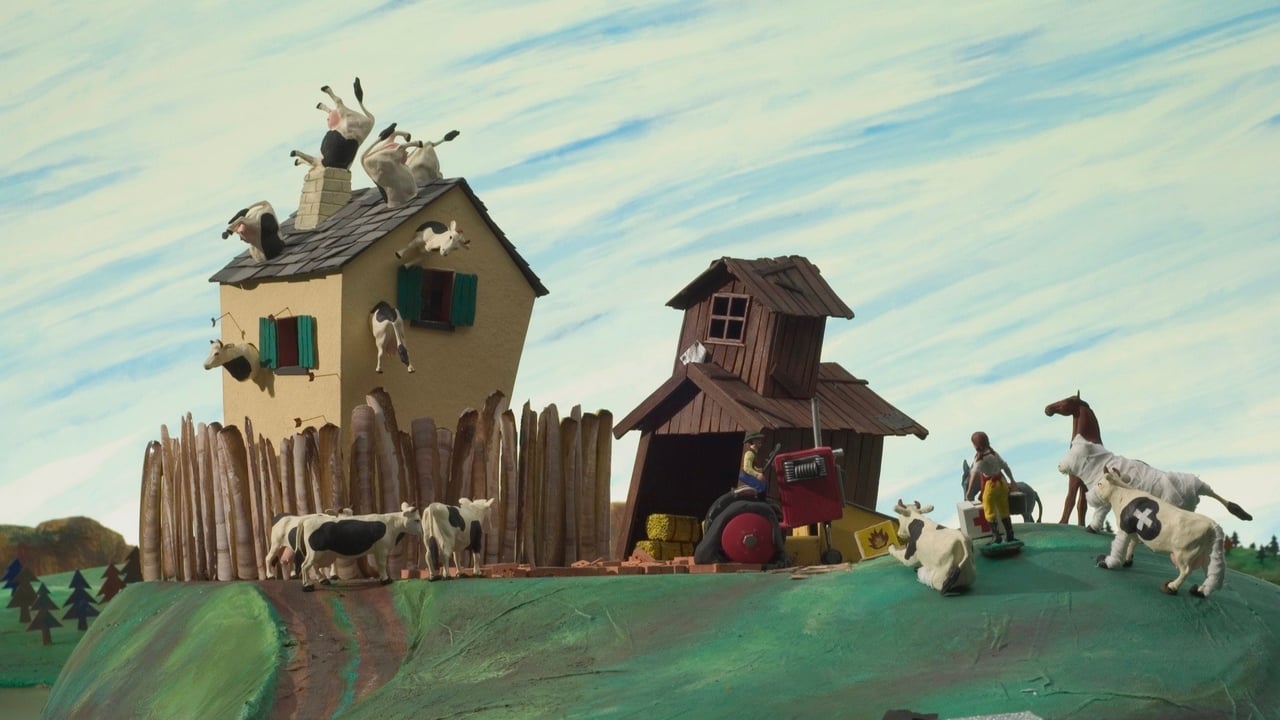
Stéphane Aubier and Vincent Patar's A Town Called Panic (Panique au village) opened Out of Competition at Cannes 2009, the first stop-motion animated feature ever programmed at the festival and the first animated Belgian feature in Cannes selection. The feature was developed from a long-running short series the directors had produced for Belgian and French television since 2000, and it won Magritte Awards for Best Sound and Best Production Design.
Three plastic toy figurines, the brusque Cowboy, the easygoing Indian, and their put-upon Horse, share a ramshackle house in a tiny mountain village where everyday life quickly spirals into chaos. When Cowboy and Indian accidentally order fifty million bricks instead of fifty for Horse's birthday present, the resulting catastrophe sends the trio on an extended adventure into kingdoms the toy-village format has no business depicting. The animation, plastic figurines moved one frame at a time on tabletop sets, produces a visual register utterly distinct from any computer-animated children's feature. The film's commercial reach was modest; its cultural influence among animators has been disproportionate, and Aubier and Patar continue to make shorts in the same universe.
10. Heavy Trip
Dir. Juuso Laatio & Jukka Vidgren · Finland / Norway · Music comedy · Tribeca selection
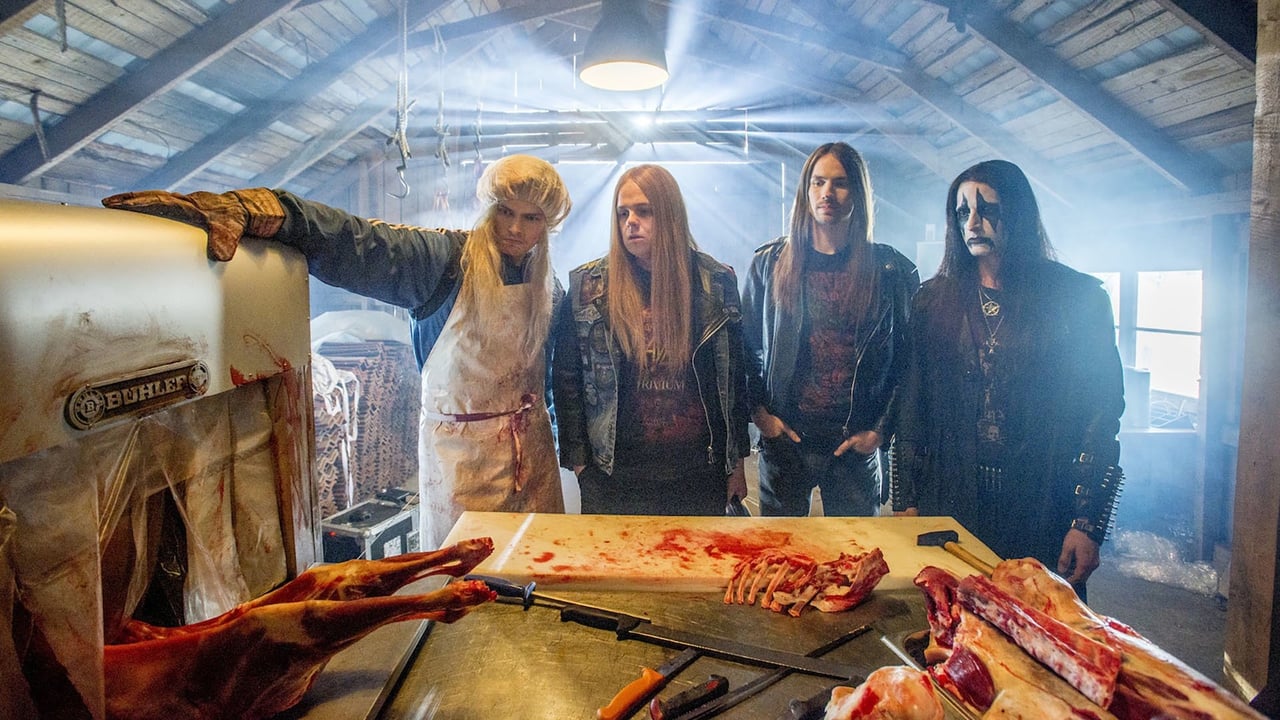
Juuso Laatio and Jukka Vidgren's Heavy Trip (Hevi reissu) opened in 2018, played Tribeca, and won the Jussi Award for Best Original Score. The film became one of the most internationally exported recent Finnish comedies and a cult favourite within metal-music subcultures across Europe and North America. Vidgren and Laatio, both of whom had backgrounds in Finnish heavy-metal music journalism, drew the screenplay partly from real Finnish underground-metal community lore.
The four members of the self-described "symphonic post-apocalyptic reindeer-grinding Christ-abusing extreme war pagan Fennoscandian metal" band Impaled Rektum have been rehearsing in their drummer's basement for twelve years without playing a single live show. Lead singer Turo (Johannes Holopainen) works at a reindeer-rendering facility; the bassist works at the local library; the guitarist at the supermarket. When a famous Norwegian metal-festival booker turns up by accident in their small Finnish town, the band sees an opening, and a road trip toward the festival begins. The film operates as broad-comic road movie, affectionate parody of metal-subculture pretensions and warm-hearted Bildungsroman, in roughly equal measure. A 2024 sequel, Heavier Trip, extended the original cast through a more international second outing.
What Europe Laughs At
Step back from the list and a pattern emerges. European comedy is rarely about gags. It is about discomfort, often about embarrassment, and almost always about the gap between how people present themselves and how the rest of the world actually sees them. Ines's father in Toni Erdmann, the yacht passengers in Triangle of Sadness, the hitmen of Bruges, the band in Heavy Trip: every premise turns on a kind of social mismatch and watches it unfold without quite letting the audience off the hook.
The other recurring quality is craft. None of these films treats comedy as the easier genre. Jeunet shot Amélie with the same compositional discipline he brought to Delicatessen; Östlund stages his comic set pieces with the precision of a chamber drama; Ade ran Toni Erdmann to 162 minutes and refused to cut a scene; Aubier and Patar moved plastic figurines one frame at a time for eighteen months to make a film about a horse-riding lesson. The laughs are funnier because the films are serious about the work.
If this list has whetted your appetite for the regional flavours, our 10 Must-Watch French Films covers a wider sweep of the Jeunet-Audiard-Ozon register, our 10 Must-Watch Irish Films sits squarely in McDonagh-Carney territory, and our 10 Must-Watch Belgian Films is the natural next stop for anyone who has just finished A Town Called Panic and wants to understand the rest of the country's cinema.