
Film
The Cabinet of Dr. Caligari
Das Cabinet des Dr. Caligari
At a German fairground, a sinister hypnotist named Dr. Caligari exhibits a somnambulist called Cesare who can predict the future, and whom Caligari uses as an instrument of murder. Told through an unreliable narrator, the film's shocking twist ending reframes the entire story and blurs the line between madness and reality. A foundational work of German Expressionist cinema, its jagged, angular sets and deeply shadowed visuals defined a visual language of dread that influenced horror filmmaking for a century.
About
Robert Wiene's The Cabinet of Dr. Caligari (German: Das Cabinet des Dr. Caligari) opened in Berlin on 26 February 1920 and is now generally treated as the foundational work of German Expressionist cinema and one of the most influential films ever made. The screenplay is by Hans Janowitz and Carl Mayer, who had drafted it in 1919 with strong anti-authoritarian intent. Producer Erich Pommer at Decla-Bioscop hired Wiene after Fritz Lang declined the project (Lang had been the original first choice.
The painted-set design was the production's central innovation: Hermann Warm, Walter Reimann and Walter Röhrig) three young expressionist painters from the Sturm-Galerie circle, designed all sets as flat painted backdrops with deliberately distorted geometry, including painted shadows and impossible angles. The technique allowed for a fully expressionist visual world on a small budget, and was directly imitated in productions across the next decade. Cinematography is by Willy Hameister.
The film is in the public domain and has been restored multiple times, most notably the Murnau-Stiftung's 4K restoration in 2014, which reconstructed the original tinted colour scheme from a surviving 1921 export print. It is taught as the primary text in German Expressionist film modules at university film departments worldwide. Lotte Eisner's 1952 study The Haunted Screen places it at the centre of the entire Weimar-era cinematic tradition; its visual influence on the work of Tim Burton, David Lynch and Guillermo del Toro is regularly catalogued in the academic and popular literature on those directors.
Where to Watch
Not currently available in your country.
Available in: , , , , , , , , , , , , , , , ,











































Streaming availability via JustWatch. Last checked 2026-10-11.
Top Cast
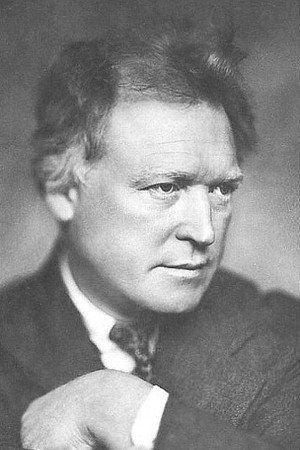
Werner Krauss
Dr. Caligari

Conrad Veidt
Cesare

Friedrich Fehér
Francis

Lil Dagover
Jane

Hans Heinrich von Twardowski
Alan


Featured In
- 10 Must-Watch European Horror Films 1 May 2026
- 10 Must-Watch German Films of All Time 19 May 2026