
Film
Black Orpheus
Orfeu Negro
During Carnival in Rio de Janeiro, a tram conductor named Orfeu, engaged to be married, falls for a country girl, Eurydice, who has fled to the city in fear of a stranger pursuing her. As the favela erupts in samba and costume, their sudden love plays out against the rhythms of the festival.
About
A French-Brazilian-Italian co-production directed by Marcel Camus, Black Orpheus (1959) swept the major prizes of its year, taking the Palme d'Or at Cannes and the Academy Award for Best Foreign Language Film, as well as a Golden Globe. It relocates the Greek myth of Orpheus and Eurydice to the hillside favelas of Rio de Janeiro during the frenzy of Carnival.
Shot in saturated colour amid real crowds and processions, the film is carried by its music as much as its images: the soundtrack by Antônio Carlos Jobim and Luiz Bonfá helped introduce bossa nova to the world, and songs such as Manhã de Carnaval became enduring standards. Camus films the dancing, the costumes and the steep, sunlit streets with a sensuous energy that turns the city itself into a leading character, the myth playing out beneath an ever-present sense of fate.
Its international success made it many viewers' first encounter with Brazilian music and culture, though later Brazilian artists, among them the film-makers of Cinema Novo, would debate its romanticised outsider's gaze. However one weighs that question, its role in the global rise of bossa nova is undeniable, and as pure film-making it remains intoxicating — a Greek tragedy retold in colour, rhythm and song, with an ache of inevitability beneath the celebration that gives the spectacle its lasting power.
Where to Watch
Not currently available in your country.
Available in: , , , , , , , ,

























Streaming availability via JustWatch. Last checked 2026-09-27.
Top Cast
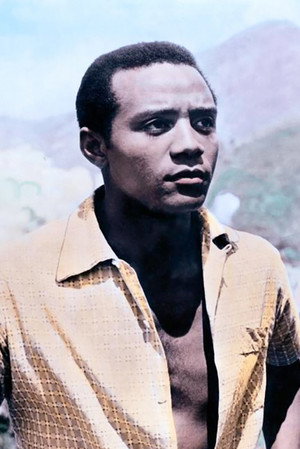
Breno Mello
Orfeo

Marpessa Dawn
Eurydice

Lourdes de Oliveira
Mira

Léa Garcia
Serafina

Adhemar Ferreira da Silva
Death
Awards, Festivals & Mentions
-

Winner — Academy Award Best Foreign Language Film (1960)
-

Winner — Palme d’Or, Cannes Film Festival (1959)
-

Winner — Golden Globe Best Foreign Film (1960)


