From the streets of Rome under Nazi occupation to a U-boat in the North Atlantic and a villa beside Auschwitz, the European war film is cinema's longest unbroken argument with itself.
European war cinema does not begin in 1945; it begins in 1945 and never quite leaves. Roberto Rossellini was shooting Rome, Open City in the streets of Rome while the war in Europe was still being fought, scrounging unexposed stock from American GIs and casting non-professionals because the city's professional actors were either dead, in hiding, or out of work. Italian neorealism was a wartime form before it was a postwar one, and the moral seriousness of European film about war has never quite shaken that origin.
The lineage divides into national traditions. Soviet and Eastern Bloc cinema produced the great anti-war canon — Elem Klimov's Come and See, made for the fortieth anniversary of the Soviet victory, remains the most uncompromising film ever shot about the Eastern Front. German cinema spent decades working out how to film its own complicity, from Wolfgang Petersen's submarine epic to Edward Berger's German-language return to Erich Maria Remarque, to Jonathan Glazer's formally radical Holocaust film about the family that lived next door to Auschwitz. The Resistance tradition runs through Rossellini and into Norwegian, Danish and Polish memory cinema. The British war film, from Powell and Pressburger to Christopher Nolan, has its own register entirely.
What unites them is a refusal of the heroic mode. These are films about attrition, occupation, complicity, and survival — about what it costs a country, a family, a single body to live through a continental war. Here are ten that earn the weight of the subject.
1. Come and See
Dir. Elem Klimov · Soviet Union · Sight & Sound 250 Greatest Films
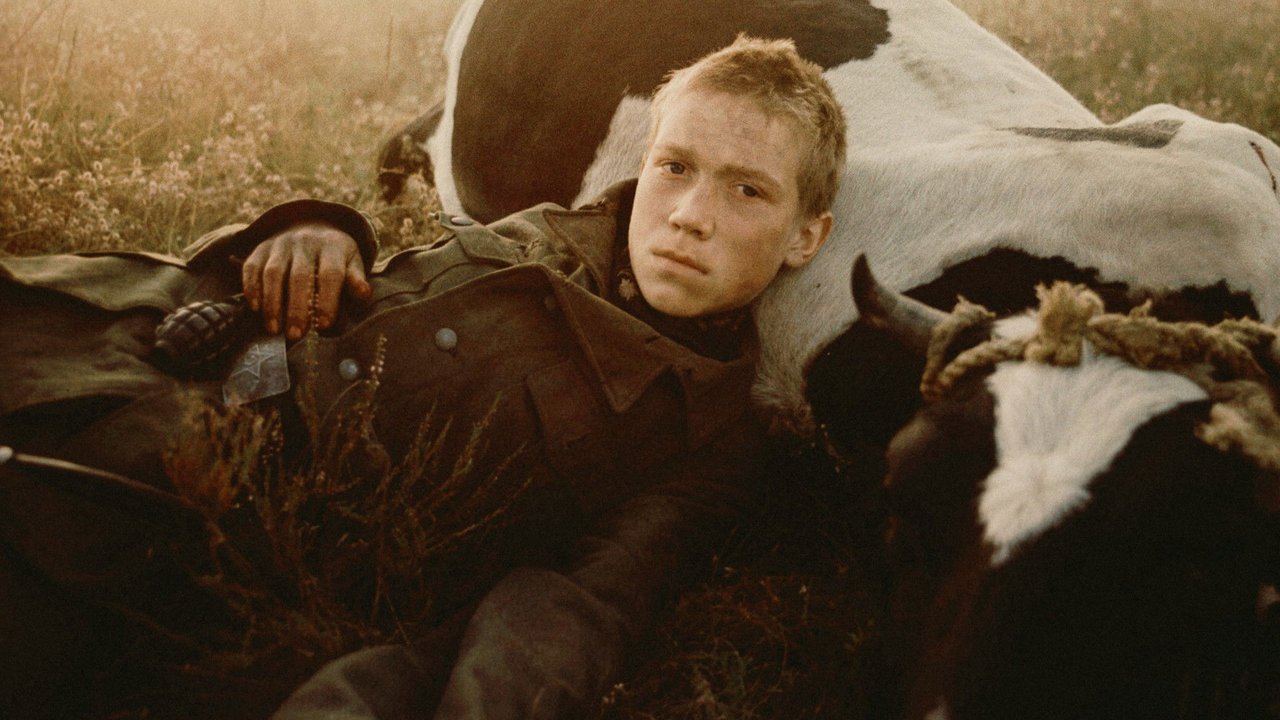
Elem Klimov spent eight years pushing the script past Soviet censors before Come and See was finally approved as part of the official 40th-anniversary commemoration of Victory Day in 1985. 1943, occupied Belarus. Flyora, a thirteen-year-old village boy played by the non-professional Aleksei Kravchenko, joins the local partisan resistance and is plunged into the wider Nazi reprisal campaign that would eventually destroy 628 Belarusian villages along with their inhabitants. Klimov used live ammunition in several scenes, and Kravchenko's visible ageing across the 142-minute runtime is partly the genuine psychological toll of the shoot.
The film's title is taken from the Book of Revelation. Its formal innovations — Steadicam-tracking work then almost unknown in Soviet production, broken-fourth-wall stares directly into camera, the strange unscored hush on the soundtrack — have influenced everyone from Terrence Malick to Klimov's Russian and Ukrainian descendants. It sits at number 21 in the 2022 Sight & Sound critics' poll. After completing this film Klimov made no other features; he felt he had exhausted what cinema could do.
2. All Quiet on the Western Front
Dir. Edward Berger · Germany · 4 Academy Awards including Best International Feature
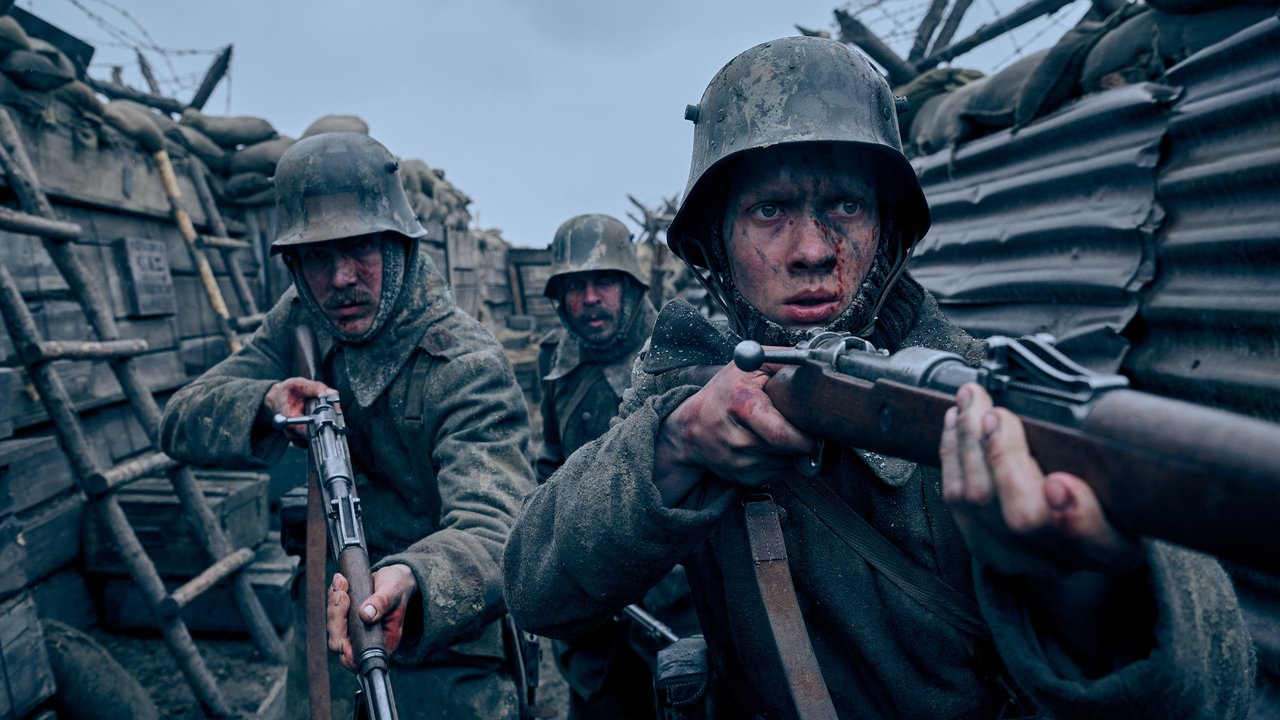
Edward Berger's All Quiet on the Western Front (Im Westen nichts Neues) opened on Netflix in October 2022 and won four Academy Awards in 2023, including Best International Feature, Best Cinematography (James Friend), Best Production Design and Best Original Score. The film was the first German-language adaptation of Erich Maria Remarque's 1929 anti-war novel in nearly a century — Lewis Milestone's 1930 Hollywood version had been the canonical screen rendering, with English-speaking actors in the German uniforms.
1917, the late Western Front. Felix Kammerer, in his first feature role after a Vienna theatre career, plays Paul Bäumer, a seventeen-year-old who enlists with three classmates after a school assembly speech that frames combat as the highest form of patriotism. Daniel Brühl plays the German negotiator Matthias Erzberger in a parallel diplomatic-track plotline that Berger weaves into Bäumer's trench experience. Friend's photography earned its Oscar through a sustained register of mud, fog and frozen distance; the choice to add the Erzberger negotiations to material Remarque had deliberately confined to the soldier's eye was the most-debated structural decision in recent war-film adaptation.
3. Das Boot
Dir. Wolfgang Petersen · Germany · 6 Academy Award nominations
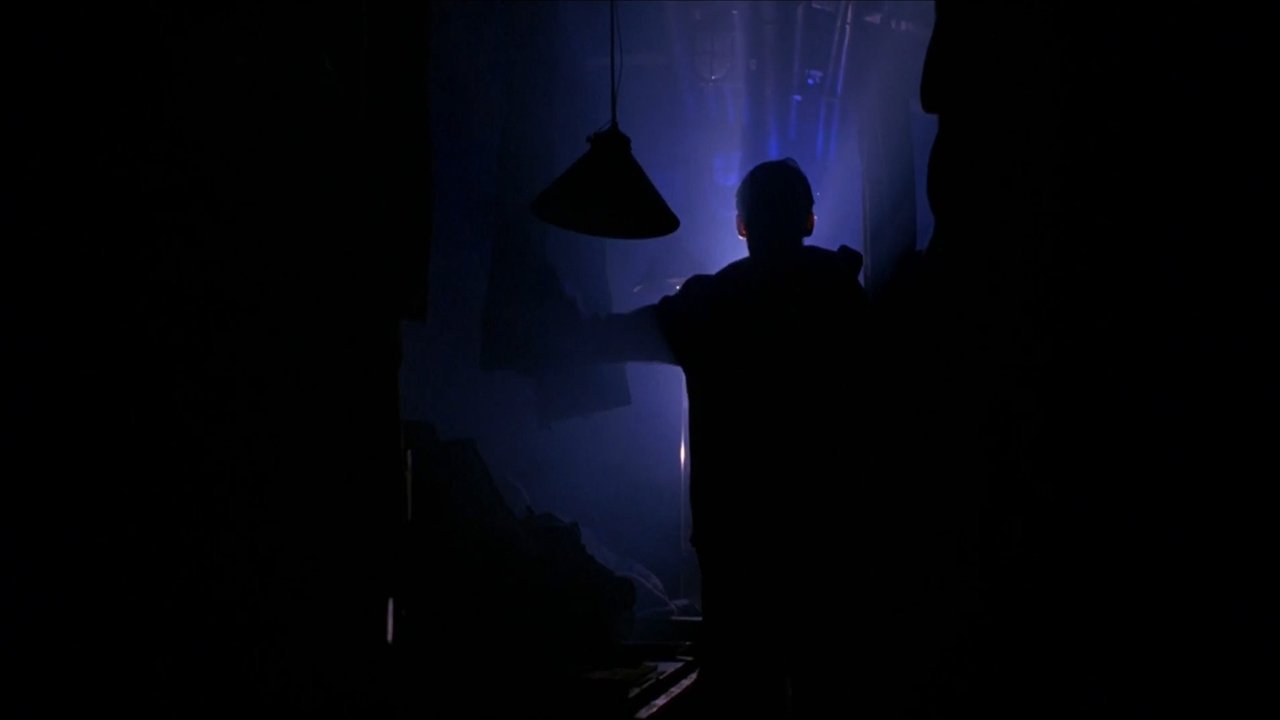
Wolfgang Petersen's Das Boot opened in West Germany in 1981 and at the 1982 Cannes Film Festival, after a six-year production on what was then the most expensive German film ever made. The film received six Academy Award nominations including Best Director and Best Adapted Screenplay, a record for a non-English-language film at the time. The 209-minute director's cut is now the standard release; a 293-minute television version exists for the truly committed.
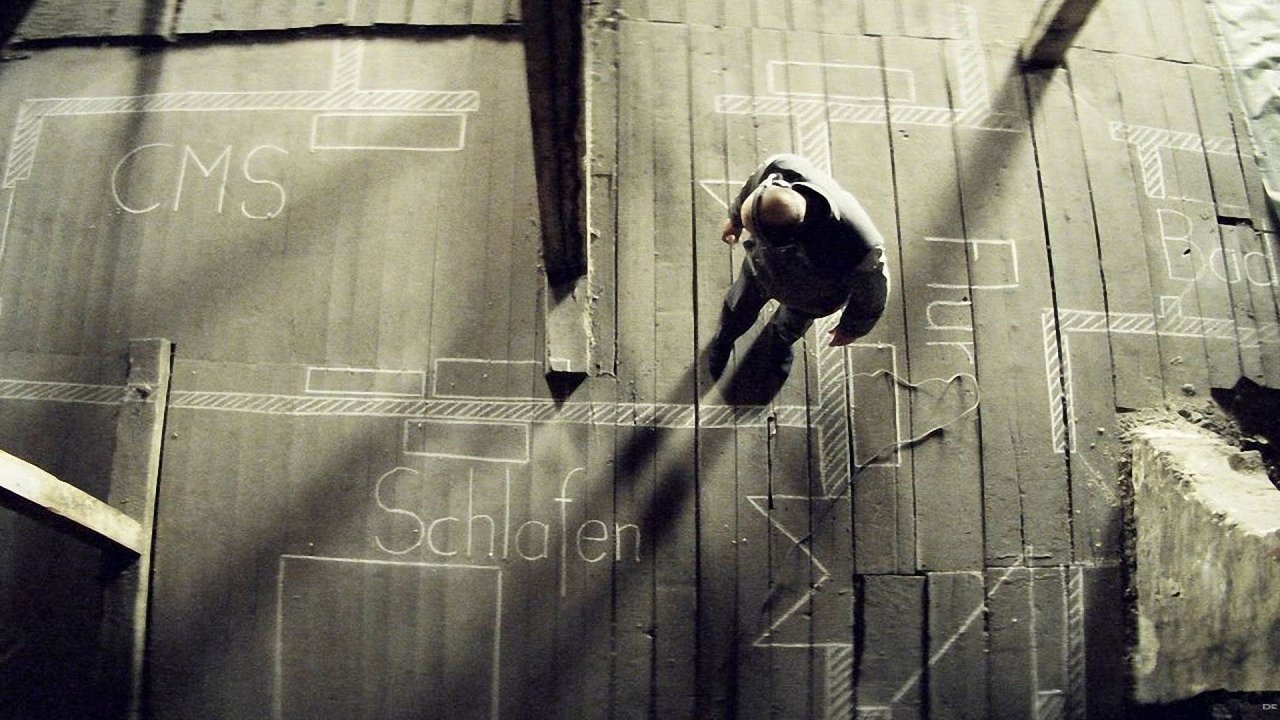
1941. A German U-boat under the command of a war-weary captain (Jürgen Prochnow) leaves La Rochelle for an Atlantic patrol. Petersen and cinematographer Jost Vacano shot inside a full-scale U-boat replica using a hand-held Arriflex bolted to a custom mount, producing the claustrophobic, propulsive interiority that defines the film. Klaus Doldinger's electronic score is an enduring earworm. The film is unusual within German cinema for centring Wehrmacht combatants without either condemning or celebrating them; it presents the U-boat war as systemically unwinnable and individually destructive, and remains the definitive submarine film, alongside Run Silent, Run Deep and The Hunt for Red October.
4. The Zone of Interest
Dir. Jonathan Glazer · UK / Poland · Cannes Grand Prix · 2 Academy Awards
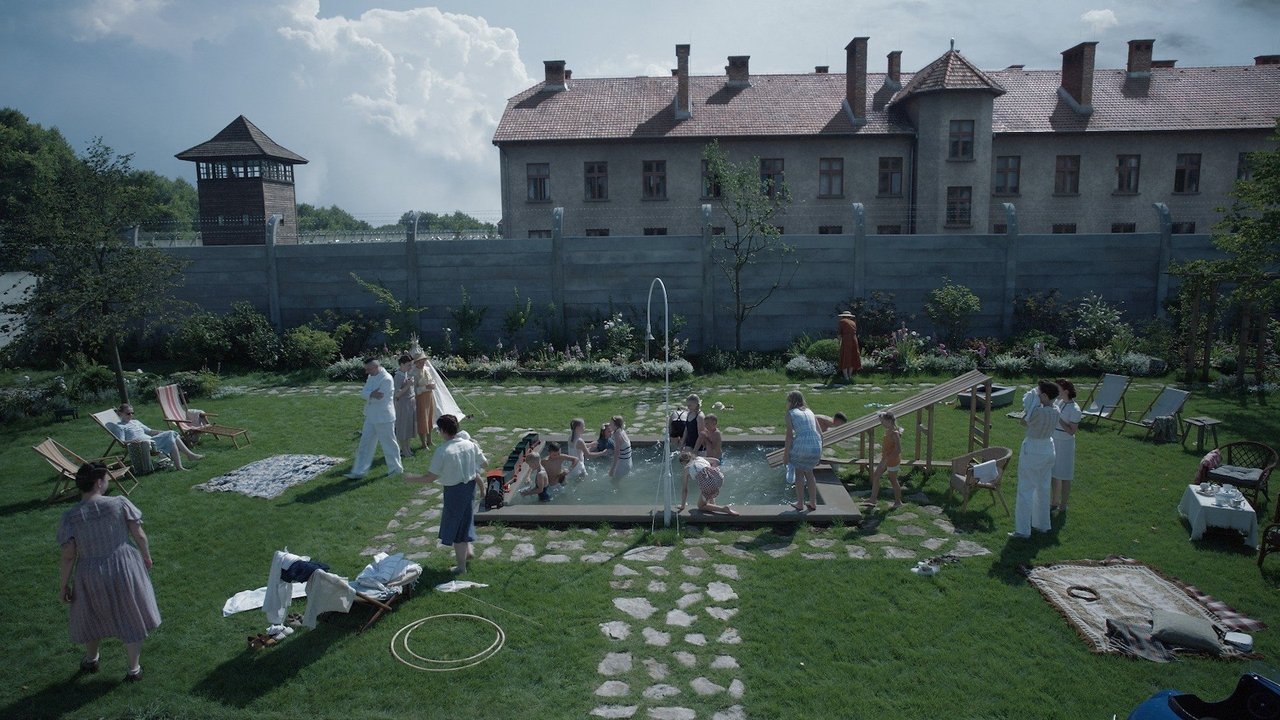
Jonathan Glazer's The Zone of Interest won the Cannes Grand Prix in 2023 (losing the Palme to Justine Triet's Anatomy of a Fall) and the Academy Awards for Best International Feature and Best Sound in 2024. Glazer's acceptance speech, in which he refused to use his Jewishness or the Holocaust to support what was happening in Gaza, was widely covered as one of the most morally precise political statements ever made at the ceremony.
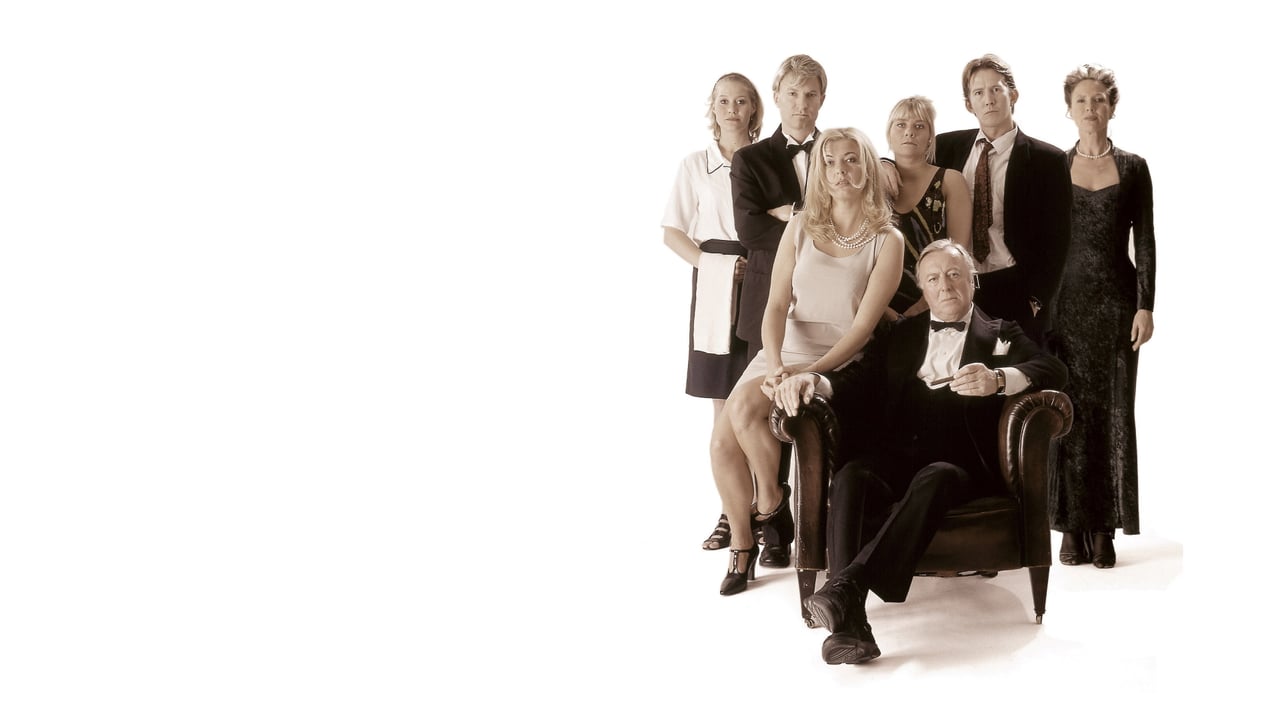
The Höss family — Rudolf, the commandant of Auschwitz (Christian Friedel), and his wife Hedwig (Sandra Hüller, in the same Cannes year as her Anatomy of a Fall performance) — build a tasteful domestic life in a villa on the other side of the camp wall. Flowers, a swimming pool, children's birthday parties, and, always, the sound of the camp machinery next door. Łukasz Żal's photography keeps the camp itself almost entirely off-screen; Mica Levi's score is minimal and disturbing; Tarn Willers and Johnnie Burn's sound design is the formal centre of the film, and the reason for the Best Sound Oscar. Glazer adapted Martin Amis's 2014 novel but reduced its narrative scaffolding almost to nothing — horror as wallpaper, not picture.
5. The Pianist
Dir. Roman Polanski · France / Germany / Poland / UK · Palme d'Or · 3 Academy Awards
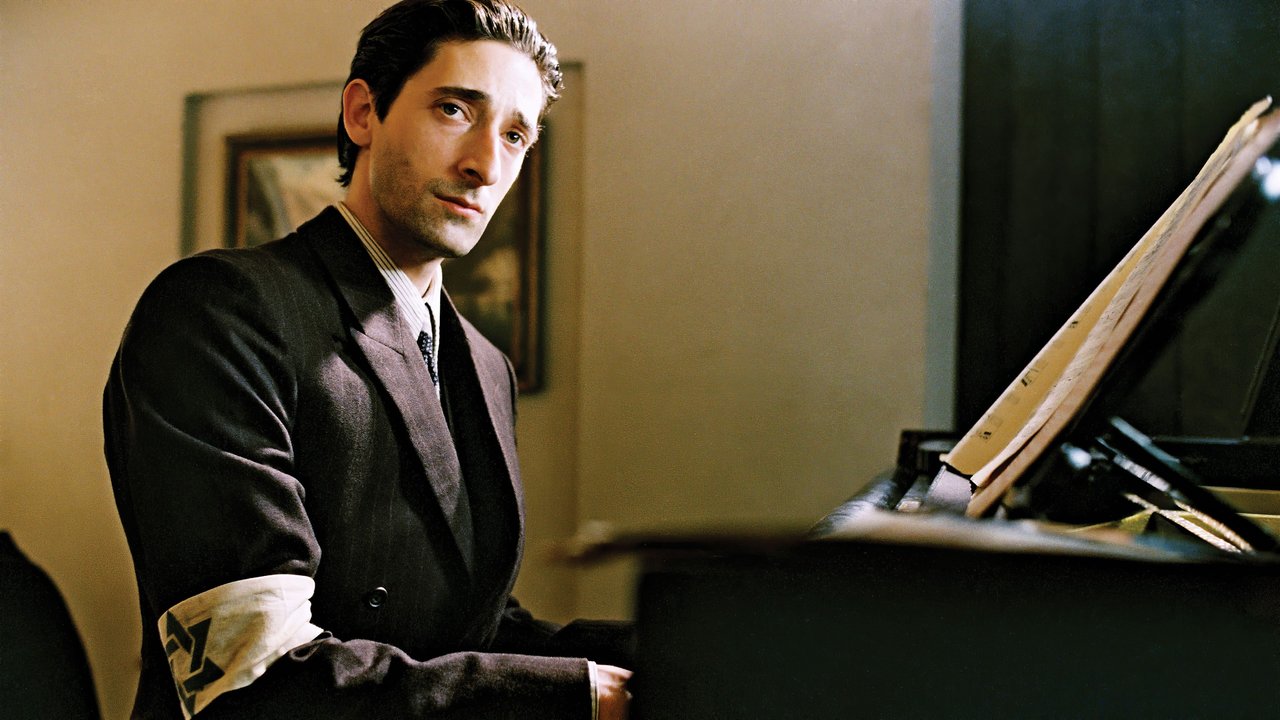
Roman Polanski's The Pianist won the Palme d'Or at Cannes 2002 — Polanski's first major Cannes prize after four decades of work — and took three Academy Awards in March 2003: Best Director, Best Actor (Adrien Brody) and Best Adapted Screenplay (Ronald Harwood). Brody's win at twenty-nine made him the youngest Best Actor winner in Academy history, a record he still holds.
Adapted from the autobiographical memoir of the Polish-Jewish concert pianist Władysław Szpilman, the film follows his survival in occupied Warsaw from the German invasion of 1939 onward. Polanski himself had survived the Kraków Ghetto as a child during the same period; his mother was murdered at Auschwitz. He had repeatedly turned down Steven Spielberg's offers to direct Schindler's List on the grounds that he could not work with the material then. The film was shot in Warsaw and at Babelsberg Studios in Germany, with photography by Paweł Edelman and a Wojciech Kilar score built around extensive Chopin performance. Brody learned to play piano competently for the role across several months of preparation, and the long, restrained close-ups of his hands at the keyboard are part of what won him the prize.
6. Land of Mine
Dir. Martin Zandvliet · Denmark / Germany · Academy Award nomination Best Foreign Language Film
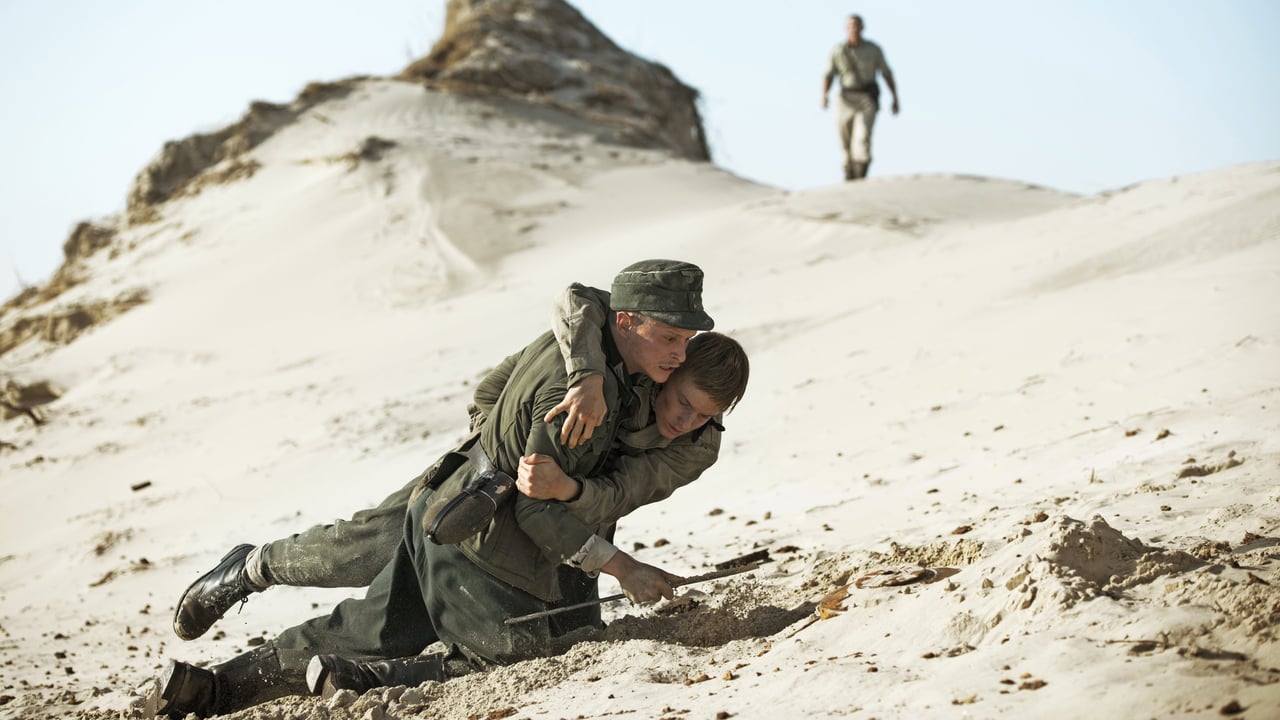
Martin Zandvliet's Land of Mine (Under sandet) was nominated for the Academy Award for Best Foreign Language Film in 2017 and won the Bodil for Best Danish Film in 2016. The screenplay is built on a historical fact the Danish state had largely declined to publicly acknowledge until recent decades: in the aftermath of the Second World War, approximately 2,000 German prisoners of war, many of them teenage boys conscripted in the war's final months, were forced to manually defuse the millions of landmines buried along Denmark's western coast by the Nazi occupation.
Sergeant Carl Rasmussen (Roland Møller) of the Danish military is assigned to oversee one such unit on the windswept Jutland beaches, with Louis Hofmann as the central German prisoner Sebastian. Camilla Hjelm Knudsen's photography of the coast — long static frames, dunes, sea, minimal infrastructure — produced one of the most distinctive visual registers of recent Danish cinema. The film operates simultaneously as a procedural document and as a meditation on what occupation-aftermath justice should actually look like, and has continued to be politically consequential within Danish-German historical discourse.
7. Stalingrad
Dir. Joseph Vilsmaier · Germany · Bavarian Film Award Best Direction
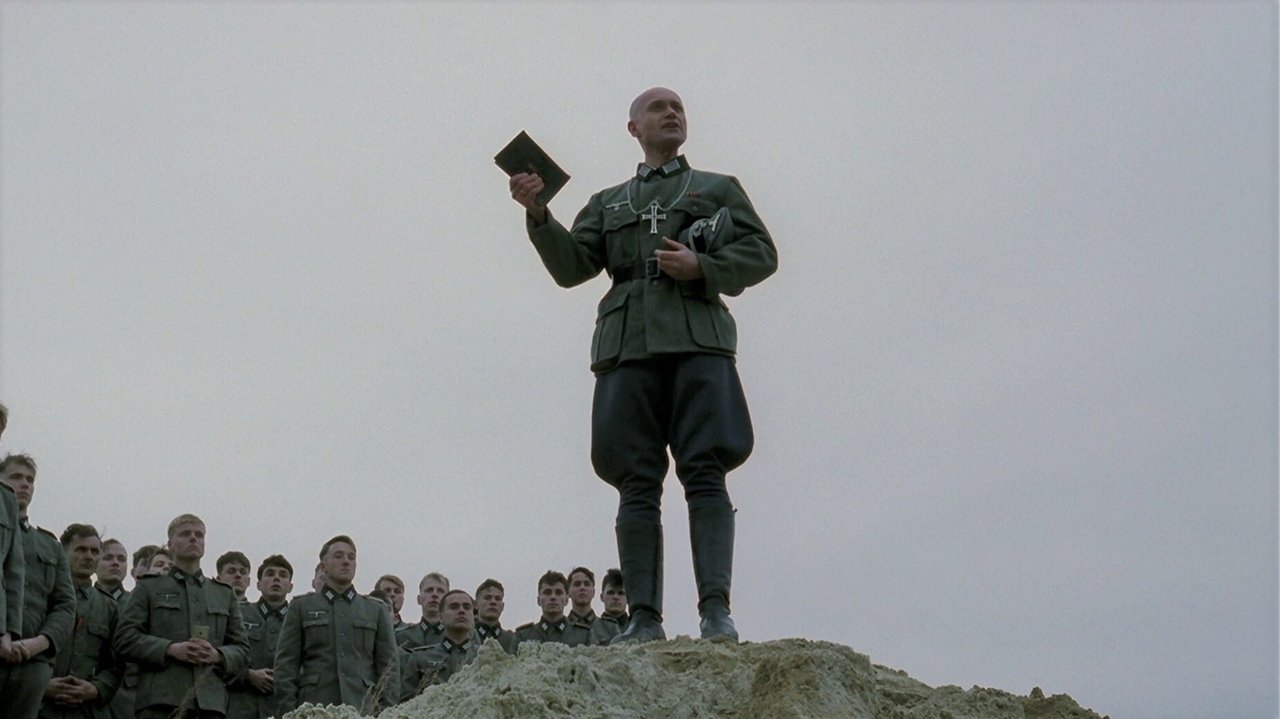
Joseph Vilsmaier's Stalingrad arrived in 1993 as one of the most expensive German productions of its decade, with a budget of approximately twenty million Deutschmarks. Vilsmaier, a former cinematographer who had directed Autumn Milk (1989) and Rama Dama (1991), assembled a production at the upper limit of what unified Germany's young commercial film industry could finance, shooting on location in Finland and the Czech Republic across an unusually long winter schedule.
A unit of German soldiers, freshly arrived from the relative comfort of an Italian posting in the autumn of 1942, is marched into the Sixth Army's Stalingrad campaign. Thomas Kretschmann, Jochen Nickel, Sebastian Rudolph and Dominique Horwitz lead the cast; Vilsmaier shot it himself. The film was deliberately positioned in opposition to the Hollywood war-film tradition, and Vilsmaier has cited Sam Peckinpah's Cross of Iron (1977), itself partly a German co-production, as a primary stylistic influence. It is a permanent fixture in German history-curriculum viewing, and the Bundeszentrale für politische Bildung lists it as a recommended teaching reference for the Eastern Front module of upper-secondary German history.
8. Rome, Open City
Dir. Roberto Rossellini · Italy · Cannes Grand Prix 1946 · the founding text of Italian neorealism
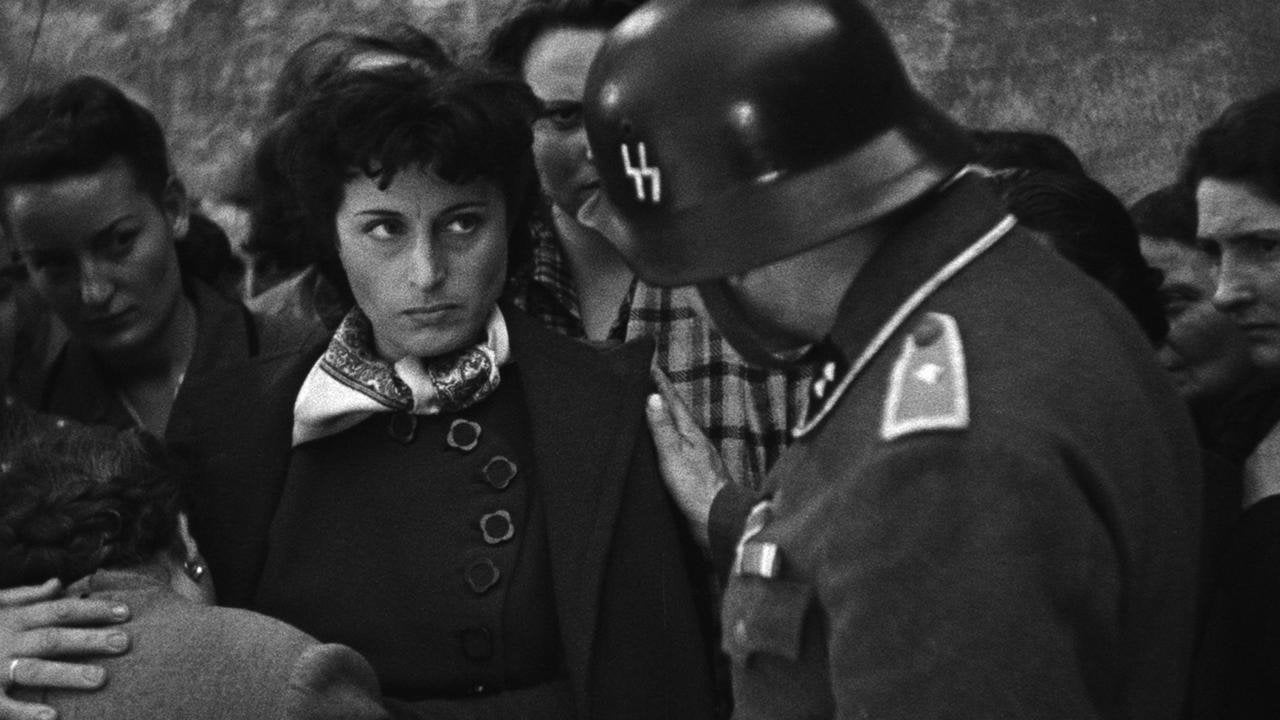
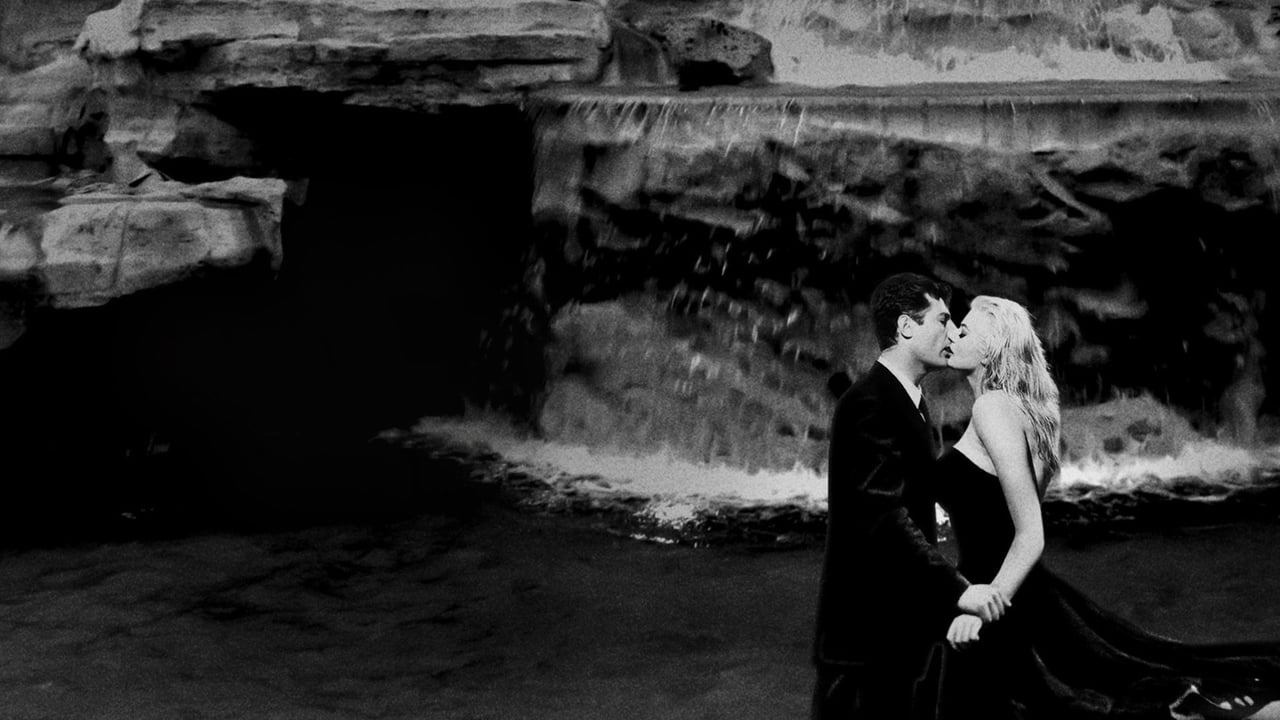
Roberto Rossellini shot Rome, Open City (Roma città aperta) on the streets of Rome between January and June 1945, with the war in Europe still ongoing — the Allied liberation of Rome had occurred only eight months earlier. He scrounged unexposed film stock from amateurs and from American GIs; some scenes were filmed with the camera hidden because Rome's streets were still patrolled by uncertain authorities. The film won the Grand Prix at the inaugural Cannes Festival in 1946 and is the foundational text of Italian neorealism.
The story interweaves two strands of resistance against the German occupation: the Communist organiser Giorgio Manfredi (Marcello Pagliero) and the Catholic priest Don Pietro Pellegrini (Aldo Fabrizi, the only major professional in the cast). Anna Magnani plays Pina, fiancée of a print-shop owner involved with the resistance, and her performance is one of the great early-postwar arrivals in European cinema. Rossellini cast non-professionals in most of the supporting roles. The film established the neorealist programme — location shooting, non-professional cast, contemporary subjects, refusal of conventional narrative comforts — that Truffaut, Pier Paolo Pasolini and the Iranian New Wave would all trace their lineages partly through.
9. The 12th Man
Dir. Harald Zwart · Norway · Highest-grossing Norwegian-language film of 2017
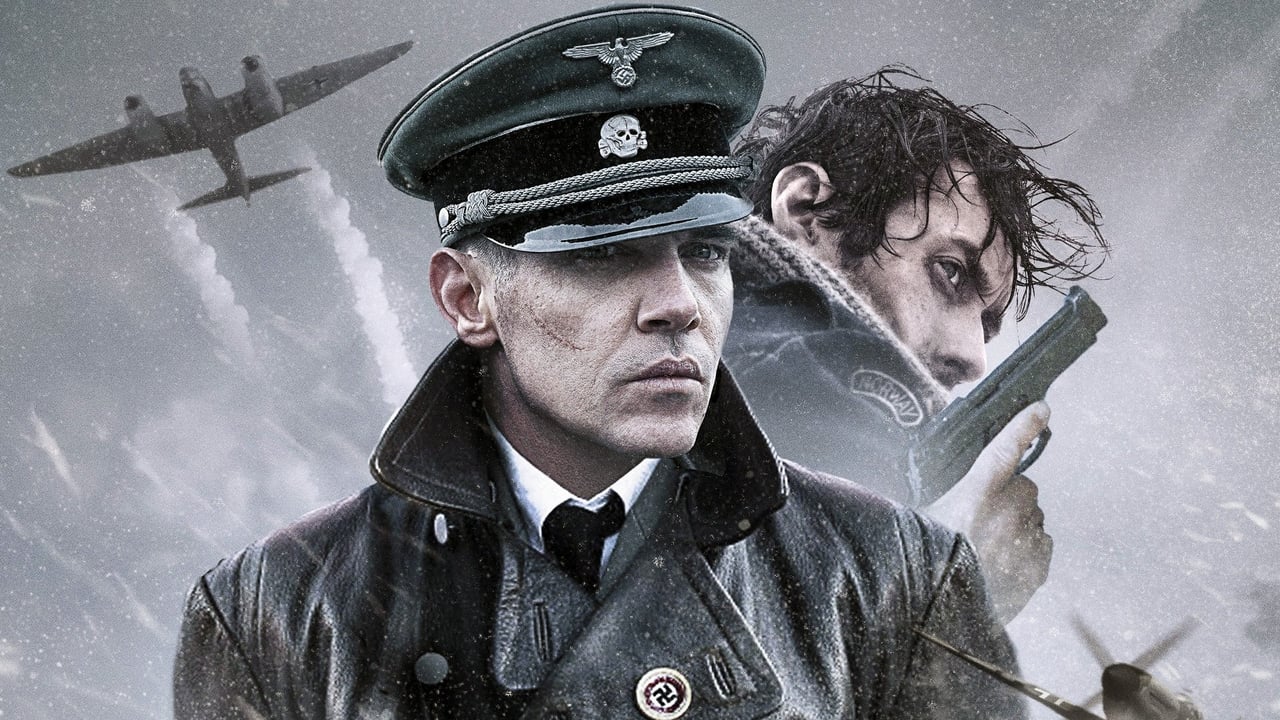
Harald Zwart's The 12th Man (Den 12. mann) is a 2017 Norwegian dramatisation of the real story of Jan Baalsrud, the sole survivor of Operation Martin, a 1943 SOE-coordinated sabotage mission against German installations in the Norwegian Arctic. The events have been dramatised twice before in Norwegian cinema, most famously in Arne Skouen's Nine Lives (1957), which had been Norway's first Academy Award nomination for Best Foreign Language Film.
Zwart returned to Norway for the production after fifteen years working on Hollywood properties including The Karate Kid (2010); The 12th Man was his first Norwegian-language feature. Thomas Gullestad takes the title role; Jonathan Rhys Meyers plays the Gestapo officer Kurt Stage. The film was shot largely on location in northern Norway during the actual months and weather conditions Baalsrud's escape would have involved, including extensive sequences on glaciers and on the open Arctic Ocean. Its restraint is part of its strength — the Baalsrud story is one of the central narratives of Norwegian wartime memory, and Zwart treats it without theatre.
10. Dunkirk
Dir. Christopher Nolan · UK / US · 3 Academy Awards
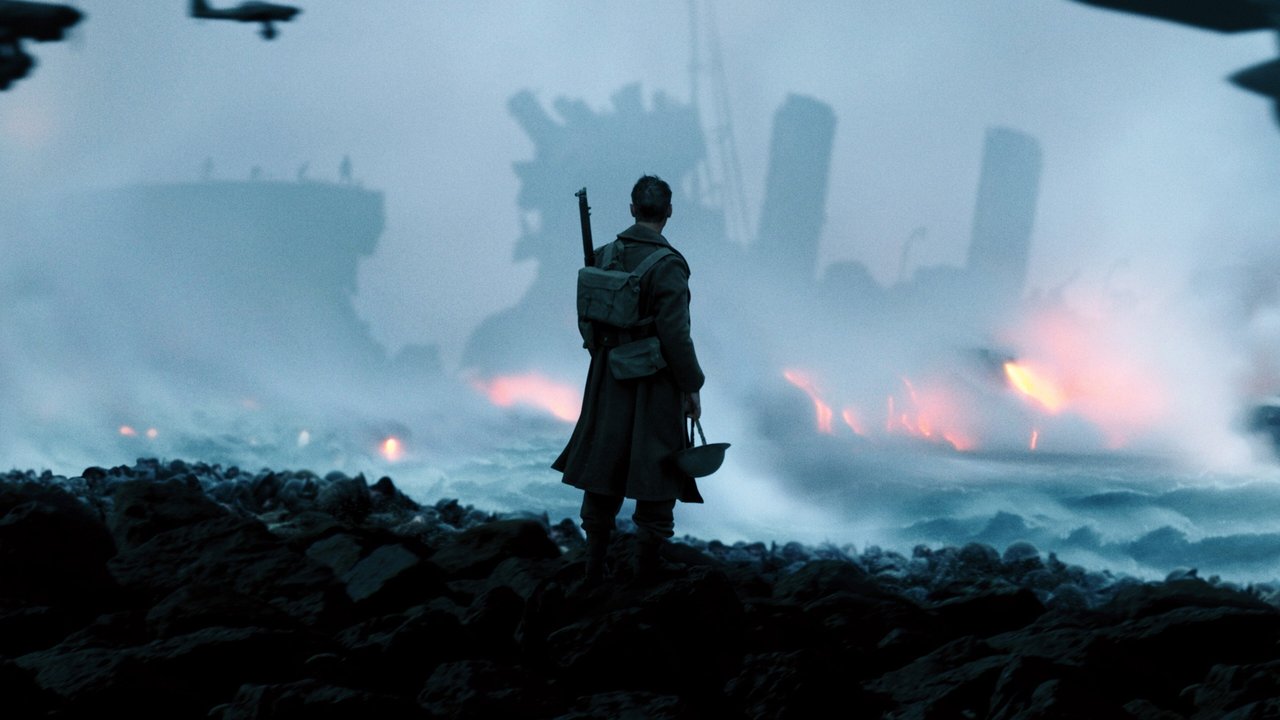
Christopher Nolan's Dunkirk opened in 2017 and won three Academy Awards including Best Film Editing, Best Sound Editing and Best Sound Mixing. The film became Nolan's first major-prize technical-Oscar success and consolidated his reputation as the most commercially confident auteur director working in Hollywood. It was shot largely on 65mm IMAX with practical effects, including real Spitfires and real period vessels, in a continuing Nolan commitment to physical-set production.
May 1940. Approximately 400,000 Allied soldiers are stranded on the beaches of Dunkirk as the Wehrmacht closes in. The film tells the story across three intercut timelines — a week on the beach (Fionn Whitehead, Aneurin Barnard, Harry Styles in his acting debut), a day at sea aboard a small civilian boat sailing from England (Mark Rylance, Tom Glynn-Carney, Barry Keoghan), and an hour in the air with three Spitfire pilots (Tom Hardy, Jack Lowden, Michael Caine in voice-over). Kenneth Branagh anchors the beach perspective. Hoyte van Hoytema's 65mm IMAX photography produced one of the most spectacular wartime image-registers in 21st-century cinema; Hans Zimmer's score, structured around a continuous tick-tock motif, holds the tension across the entire 106-minute runtime.
A Continent Filming Its Own Worst Century
What emerges from this list is not a single tradition but a set of overlapping ones. The Eastern Front from Klimov's Belarusian villages to Vilsmaier's frozen Wehrmacht units; the home-front Resistance from Rossellini's Rome to Zwart's Arctic Norway; the German memory cinema from Petersen's North Atlantic to Glazer's Auschwitz villa; Polanski's Warsaw and Berger's Western Front trenches sitting between them, both of them adaptations a generation in the making. The British war film, here represented by Nolan's Dunkirk, is its own register again — air, sea, and beach as a kind of national geometry.
None of these films treat the war as a settled subject. The most recent ones in the list are also the most formally ambitious: Berger refusing the Hollywood Remarque, Glazer keeping the camp off-screen entirely. Eighty years on from Rome, Open City, the European war film keeps re-opening its archive.
For a deeper read on the German tradition specifically, see our 10 Must-Watch German Films (which goes long on Das Boot alongside Fassbinder and Herzog) and our wider 10 Must-Watch European Documentaries, where the war-and-aftermath tradition continues into non-fiction with films like 20 Days in Mariupol. For the Polish wing of the canon, our 10 Must-Watch Polish Films picks up The Pianist alongside Wajda and Pawlikowski.