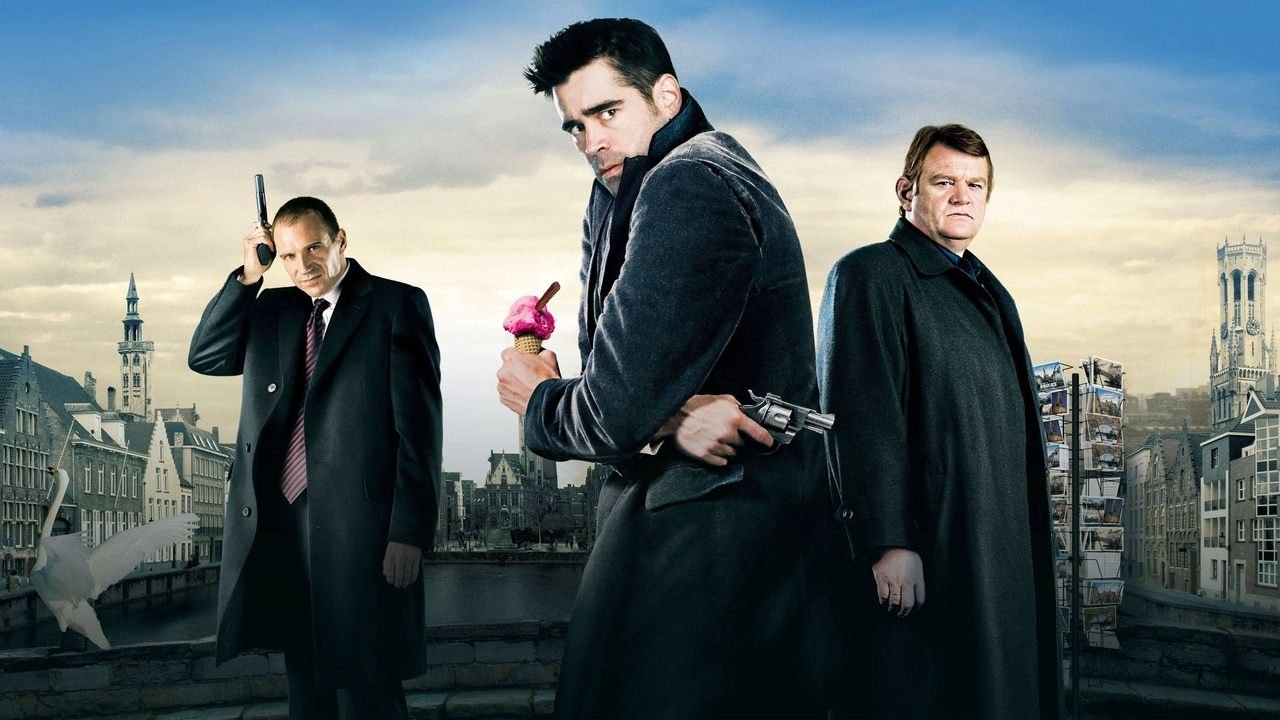
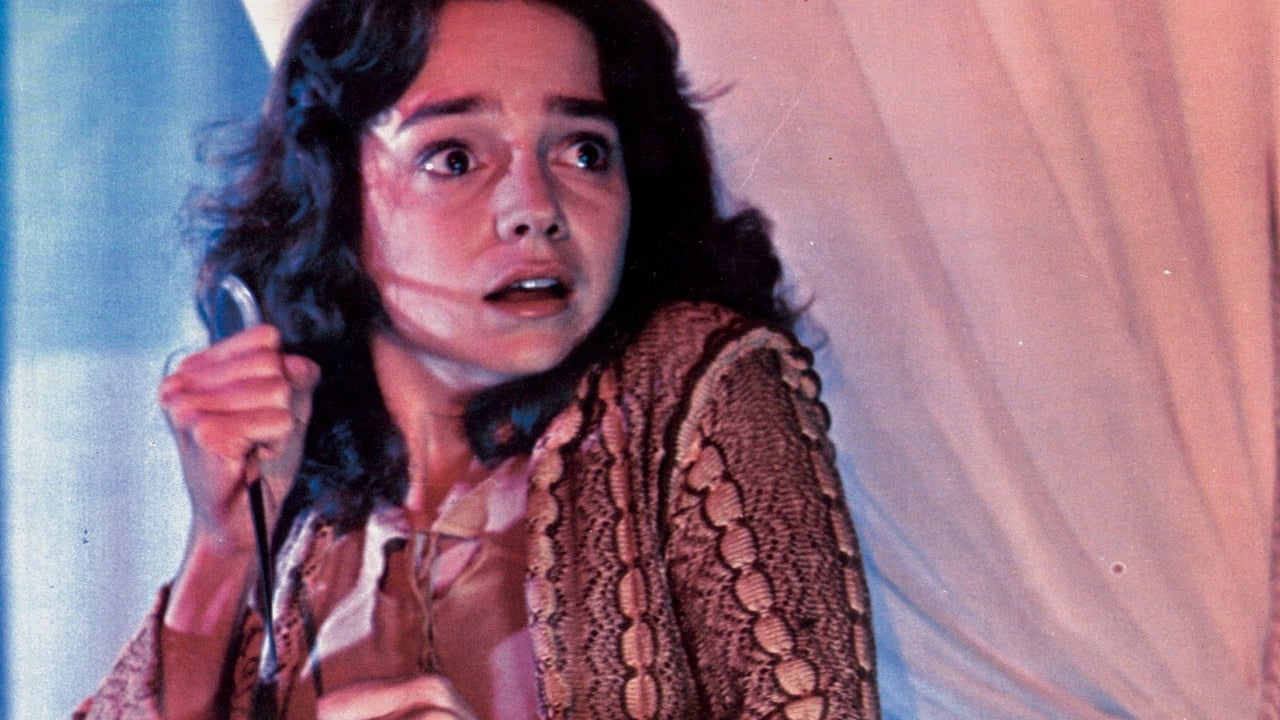
From Ingmar Bergman's existential chess match with Death to Ruben Östlund's savage dissections of bourgeois self-deception, Swedish cinema has spent seven decades asking the questions other national cinemas are too polite to raise.
No country of four million people has shaped world cinema more decisively than Sweden. Ingmar Bergman didn't just make great films (he established the philosophical vocabulary that serious cinema has been borrowing from ever since. The questions he asked in the 1950s and 1960s) about God, guilt, memory, and the performance of self, became the questions that defined what arthouse filmmaking was for. But Sweden's story didn't end with Bergman. Roy Andersson quietly emerged from decades of silence to make deadpan comedies that look like no one else's work. Stieg Larsson gave Swedish noir a global audience. And Ruben Östlund arrived to take the country's cinema in a completely new direction: satirical, confrontational, and strangely hilarious in a way that made Hollywood nervous.
This list spans 65 years and genres from medieval allegory to luxury-yacht farce. What connects these ten films isn't a single aesthetic, it's an unsentimental clarity about human nature and a persistent willingness to sit with discomfort rather than resolve it. Swedish cinema doesn't tend to let its characters off the hook. Neither should you let it let you off.
1. The Seventh Seal (1957)
Dir. Ingmar Bergman · Sweden · Drama / Fantasy
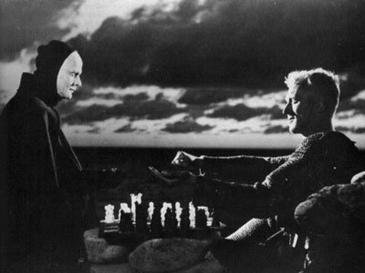
A knight returning from the Crusades encounters Death on a Swedish beach and challenges him to a game of chess, buying time to find one act of meaningful existence before the end. The image is so iconic (the robed figure, the chessboard on the sand) that it has become shorthand for a certain kind of cinematic earnestness. But the film itself is more darkly funny, more humanly warm, and more formally astonishing than the parody version suggests.
Bergman made The Seventh Seal while simultaneously shooting Wild Strawberries. He was thirty-eight years old. The film won the Special Jury Prize at Cannes and established him internationally as the defining voice of European arthouse cinema. Nearly seven decades on, its central question (how do you live meaningfully in a world that offers no assurances?) feels no less urgent. Max von Sydow's performance, all quiet anguish and rigid dignity, is one of the great screen debuts by a major actor.
2. Wild Strawberries (1957)
Dir. Ingmar Bergman · Sweden · Drama
An elderly professor drives from Stockholm to Lund to receive an honorary degree, accompanied by his daughter-in-law and plagued, along the way, by dreams, memories, and increasingly uncomfortable self-knowledge. Made in the same year as The Seventh Seal but almost entirely different in register, Wild Strawberries is Bergman at his most intimate and tender.
Victor Sjöström (himself a titan of silent Swedish cinema) plays Professor Isak Borg with a dignity that slowly crumbles into something raw. Bergman said the film was partly inspired by guilt over his own emotional coldness toward the people who loved him, and you can feel that self-reckoning in every frame. It is, in the end, a film about what it costs to have lived without paying attention, and whether recognition, even late, constitutes something like grace.
3. Persona (1966)
Dir. Ingmar Bergman · Sweden · Drama / Psychological Thriller
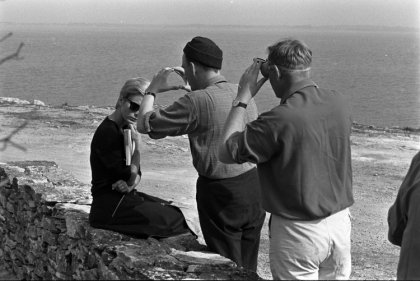
A stage actress suffering a mysterious breakdown is sent to a remote island with a nurse to recover. The actress stops speaking entirely; the nurse talks obsessively. Slowly, unnervingly, the boundaries between them begin to dissolve. Persona divided Bergman's career in two and announced that he was no longer interested in the philosophical parables of his earlier work, he was going somewhere deeper and stranger.
Made in the aftermath of Bergman's own hospitalisation, the film is less a narrative than an experiment in cinematic psychology: a study of identity, performance, and the violence of intimacy that operates at a level below conventional storytelling. Bibi Andersson and Liv Ullmann carry it entirely, in performances that require them to be simultaneously themselves and each other. Nearly sixty years old and still inexhaustible as a text.
4. Fanny and Alexander (1982)
Dir. Ingmar Bergman · Sweden · Drama
Bergman announced that Fanny and Alexander would be his final theatrical feature, and even knowing that he went on to make films for television, the film feels like a farewell: rich, sweeping, and unmistakably late-career in its warmth and generosity toward human fallibility. The story of two children caught between a loving theatrical household and a cold, authoritarian bishop stepfather is a semi-autobiographical family saga on one level and a summation of everything Bergman had been working through for three decades on another.
It won four Academy Awards including Best Foreign Language Film and Best Cinematography, the latter for Sven Nykvist's extraordinary work. At three hours in the theatrical cut (and five in the television version) it demands patience and repays every minute. Bergman later called it his most important film, not his best: the distinction feels exactly right.
5. Songs from the Second Floor (2000)
Dir. Roy Andersson · Sweden · Comedy / Drama
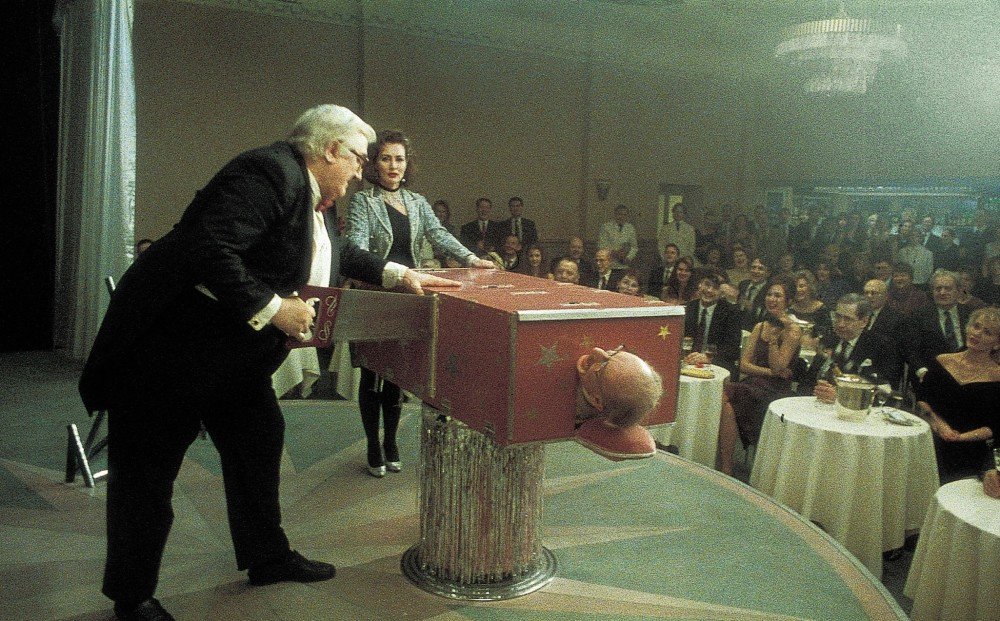
A nameless, gridlocked modern city on the verge of some unspecified catastrophe. A man burns down his furniture shop for the insurance. A magician saws a volunteer in half with irreversible results. A procession of businessmen flagellate themselves through the streets. Roy Andersson's debut fiction feature after a twenty-five year silence is unlike anything else in Swedish cinema, or, for that matter, world cinema.
Andersson shoots in long static takes, theatrical and airless, with actors in pale makeup moving through monochrome interiors that feel like Beckett by way of a particularly bleak IKEA. The result is part dark comedy, part existential lament, part indictment of capitalism's capacity to turn human beings into automatons of their own suffering. It won the Special Jury Prize at Cannes in 2000 and launched a loosely connected trilogy (continued by You, the Living and A Pigeon Sat on a Branch Reflecting on Existence) that represents one of the most distinctive bodies of work in contemporary European cinema.
6. Let the Right One In (2008)
Dir. Tomas Alfredson · Sweden · Horror / Drama
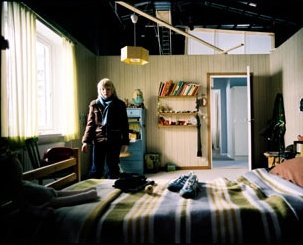
A bullied twelve-year-old boy in a 1982 Stockholm suburb befriends Eli, the strange girl who has just moved in next door, and slowly falls in love. Eli, it emerges, is a vampire who has survived for centuries, and the series of brutal murders shaking the neighbourhood is connected to her survival. Tomas Alfredson's adaptation of John Ajvide Lindqvist's novel is one of the finest horror films of the twenty-first century, not because it frightens you (though it does), but because it understands that loneliness is the real horror.
The film is shot in the pale blues and greys of a Swedish winter with a restraint that makes the violence, when it comes, feel genuinely shocking. Hoyte van Hoytema's cinematography (he would go on to Interstellar, Dunkirk and Oppenheimer) establishes the visual register here, with snowy long takes and natural-light interiors. Kåre Hedebrant and Lina Leandersson play the central relationship with an unsettling, asexual intimacy that the Hollywood remake entirely failed to replicate. A landmark.
7. The Girl with the Dragon Tattoo (2009)
Dir. Niels Arden Oplev · Sweden · Crime / Thriller
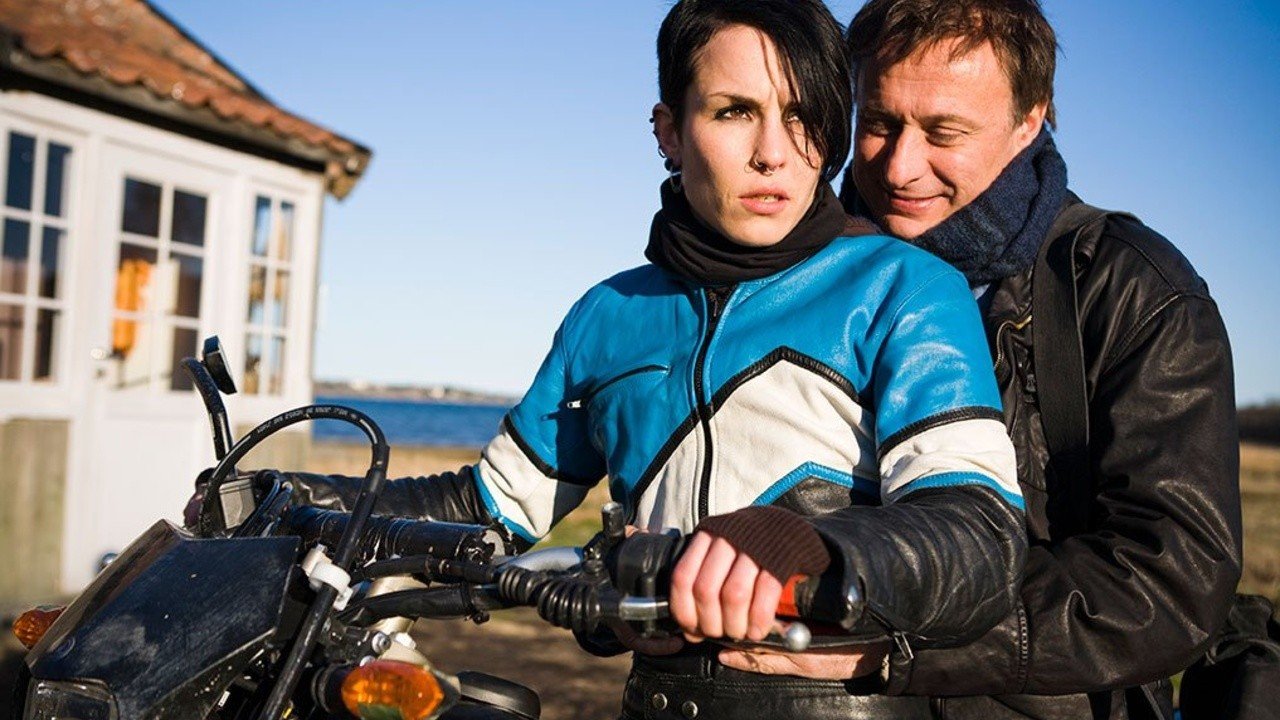
Disgraced journalist Mikael Blomkvist is hired by a wealthy industrialist to investigate the decades-old disappearance of his niece from a powerful Swedish family, and teams up with Lisbeth Salander (a brilliant, traumatised, and utterly self-sufficient young hacker) to uncover a history of violence buried inside a dynasty. Niels Arden Oplev's adaptation of Stieg Larsson's novel was a global phenomenon before David Fincher's 2011 remake existed, and it holds up better than the remake's reputation might suggest.
Noomi Rapace's Lisbeth is the definitive screen version of the character: uncompromising, ferociously intelligent, and played with a physical precision that makes her simultaneously frightening and irreplaceable. The film is less stylish than Fincher's but more grounded, more interested in the specificity of Swedish class and institutional failure than in procedural aesthetics. It won the Guldbagge Awards for Best Film and Best Actress and introduced Swedish noir to audiences who had never heard of it.
8. Force Majeure (2014)
Dir. Ruben Östlund · Sweden · Drama / Comedy
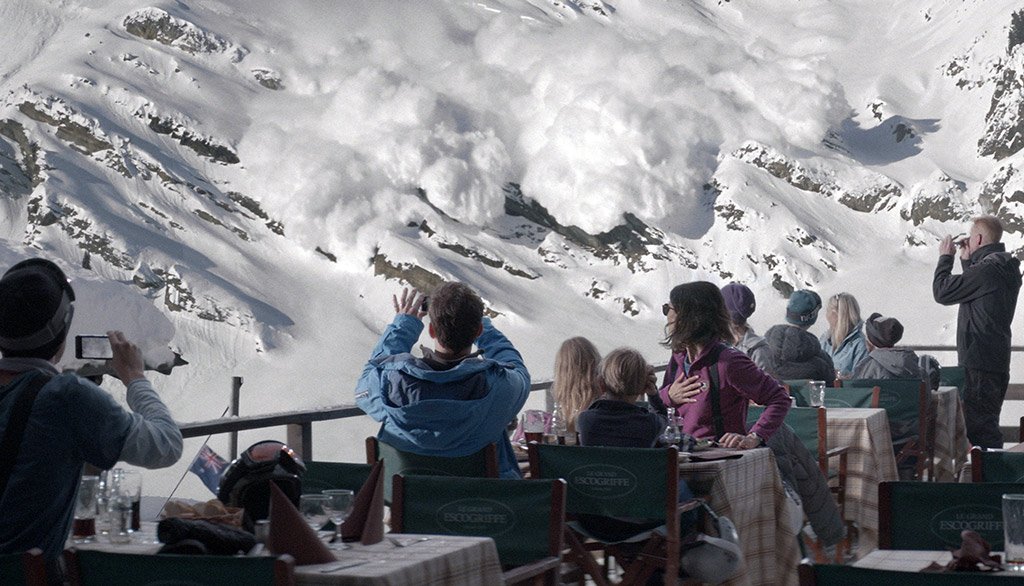
On the second day of a French Alps ski holiday, a controlled avalanche thunders toward the terrace of a luxury resort. Every adult at the table freezes, except the father, Tomas, who instinctively grabs his phone and runs, leaving his wife and children behind. The avalanche dissipates harmlessly. But the rest of the holiday is an excruciating accounting for what Tomas did in those five seconds, and what it reveals about the distance between who we think we are and who we actually are.
Ruben Östlund built his reputation in Sweden as a filmmaker with an almost clinical interest in social embarrassment, and Force Majeure is his most precisely engineered trap. The film is both blackly funny (the dinner table conversation with the other couple is a masterclass in escalating discomfort) and genuinely unsettling. It won the Jury Prize at Cannes Un Certain Regard and the European Film Award for Best Film. His next two films would win the Palme d'Or.
9. The Square (2017)
Dir. Ruben Östlund · Sweden · Satire / Drama
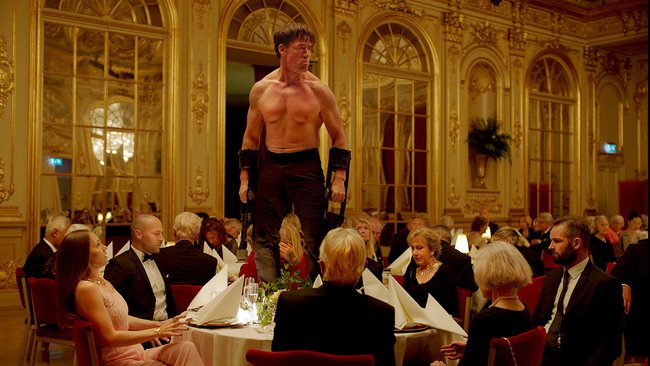
Christian, the chief curator of a prestigious contemporary art museum in Stockholm, has just commissioned the museum's next show, a participatory installation called The Square, conceived as a sanctuary of trust and altruism. He considers himself progressive, ethical and morally alert; the film over its 142 minutes finds quietly devastating ways to test that self-image. The Palme d'Or winner at Cannes 2017.
Östlund's targets are multiple and mercilessly chosen: the art world's self-congratulatory relationship with ethics, the comfortable liberal's failure of nerve, the gap between stated values and enacted behaviour. Claes Bang plays Christian (his international breakthrough, leading directly to his BBC Dracula); Elisabeth Moss appears as an American journalist; Dominic West and Terry Notary round out the major roles. The film also won Best Screenplay at the European Film Awards and was nominated for the Academy Award for Best Foreign Language Film.
10. Triangle of Sadness (2022)
Dir. Ruben Östlund · Sweden / France / UK / Germany · Comedy / Satire
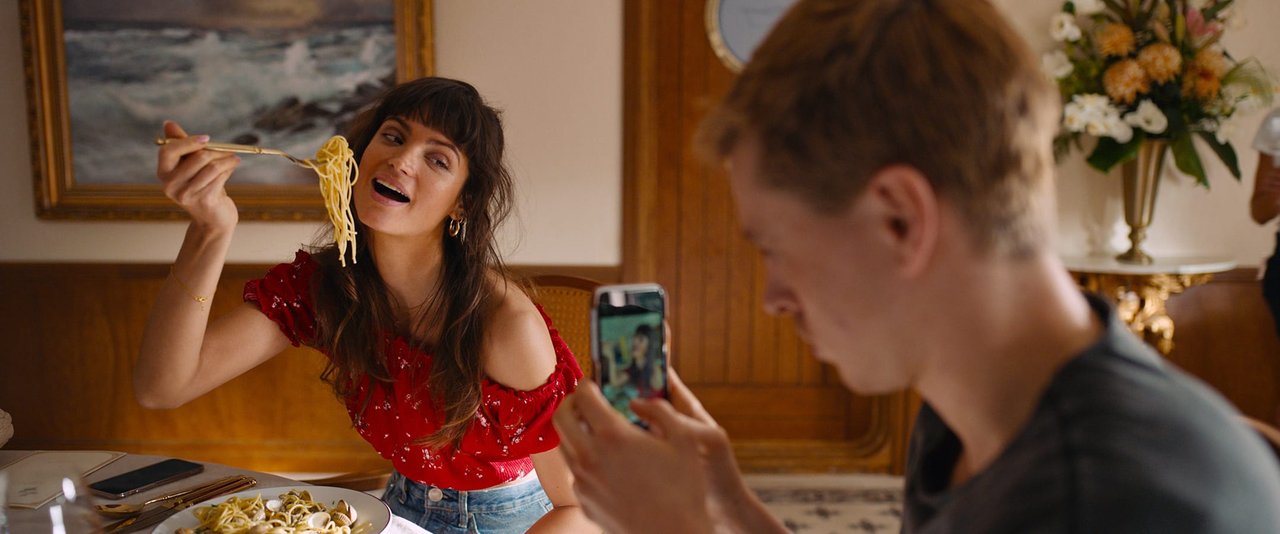
A celebrity model couple joins an exclusive luxury yacht cruise alongside the ultra-rich (a Russian fertiliser oligarch, a British arms manufacturer, a tech billionaire. The captain is a drunk Marxist played by Woody Harrelson. Östlund's second Palme d'Or winner) making him only the ninth director in Cannes history to win the prize twice, takes his satirical project to its logical extreme, staging class warfare with the structure of a farce.
Östlund is not subtle, and Triangle of Sadness is his least subtle film. That is partly a criticism and mostly a compliment: it arrives at its arguments with the force of a controlled explosion. The Filipino actress Dolly De Leon, in her international breakthrough, is one of the most memorable performances in any Östlund production to date; she would later receive a Golden Globe nomination for the role. The film also earned three Academy Award nominations including Best Picture, Best Director, and Best Original Screenplay.
Why Swedish Cinema Doesn't Let You Off
The thread running through these ten films is not geography or language, it's a refusal of consolation. Bergman's characters search for God and find only silence. Andersson's city-dwellers stumble through a world that has already ended. Östlund's protagonists recognise themselves in their worst moments and cannot look away. Let the Right One In asks you to root for a killer because the alternative is loneliness. The Girl with the Dragon Tattoo shows you institutions that protect power because that is what institutions do.
Swedish cinema doesn't offer resolutions. It offers precision. It looks at the thing clearly, reports what it finds, and leaves you with it. This is the discipline that Bergman established in the 1950s and that every filmmaker on this list has, in their own way, inherited: the discipline of not flinching and not reassuring.
If you've come to Swedish cinema via ABBA and flat-pack furniture, these films will recalibrate your expectations fairly quickly. Start with The Seventh Seal if you want to understand what the tradition looks like at its most mythic. Start with Force Majeure if you want to understand what it looks like at its most contemporary. Or start with Let the Right One In, which is somehow both.
Sweden's contribution to crime fiction extends well beyond the big screen, for the best of Scandinavian noir on television, including Wallander and The Bridge, see our 10 Must-Watch European Crime Series. And if The Girl with the Dragon Tattoo drew you to the genre, our 10 Must-Watch European Crime Films covers the continent's best.
For more in this vein, see also our 10 Must-Watch Danish Films and our 10 Must-Watch Norwegian Films.
For Ruben Östlund's Triangle of Sadness and the wider continental comic tradition, see our 10 Must-Watch European Comedies.